interim show at Wilson’s Road:


interim show at Wilson’s Road:
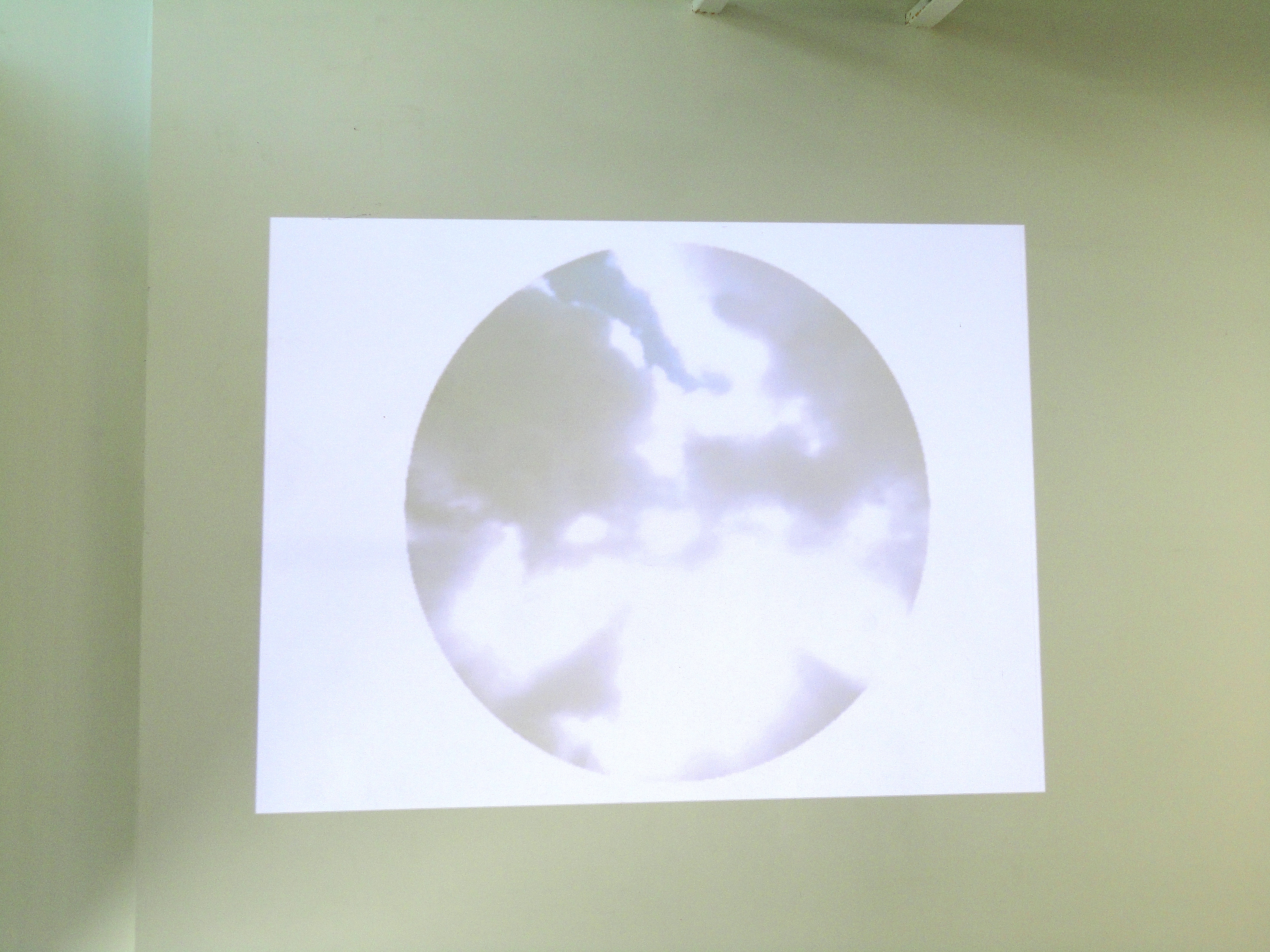
Here I took three photographs of dark rain clouds and manipulated them in order to create the illusion of the sun coming through the clouds, and disappearing again, by over and underexposing the images gradually. These I then shaped in a round format to imitate the shape of a planet, the pupil of an eye or most importantly, the shape of a petri dish or microscopic image. The images change slowly to form denser clouds and then disappear again gradually. I am interested in meteorology as a science as well as an aesthetic and sensory experience. The slowly evolving images reflect the changing conditions of the atmosphere as an artificial device to question our interference and impact on weather conditions (the sublime experience) while also alluding to observation or capturing of nature for close analysis (the subliminal experience)- on the one hand a reference to the vastness and uncertainty of the sky , and on the other our attempts to control and understand it. Here the slowly evolving images play with the wistfulness of our silent encounter with the sky and its changing conditions.
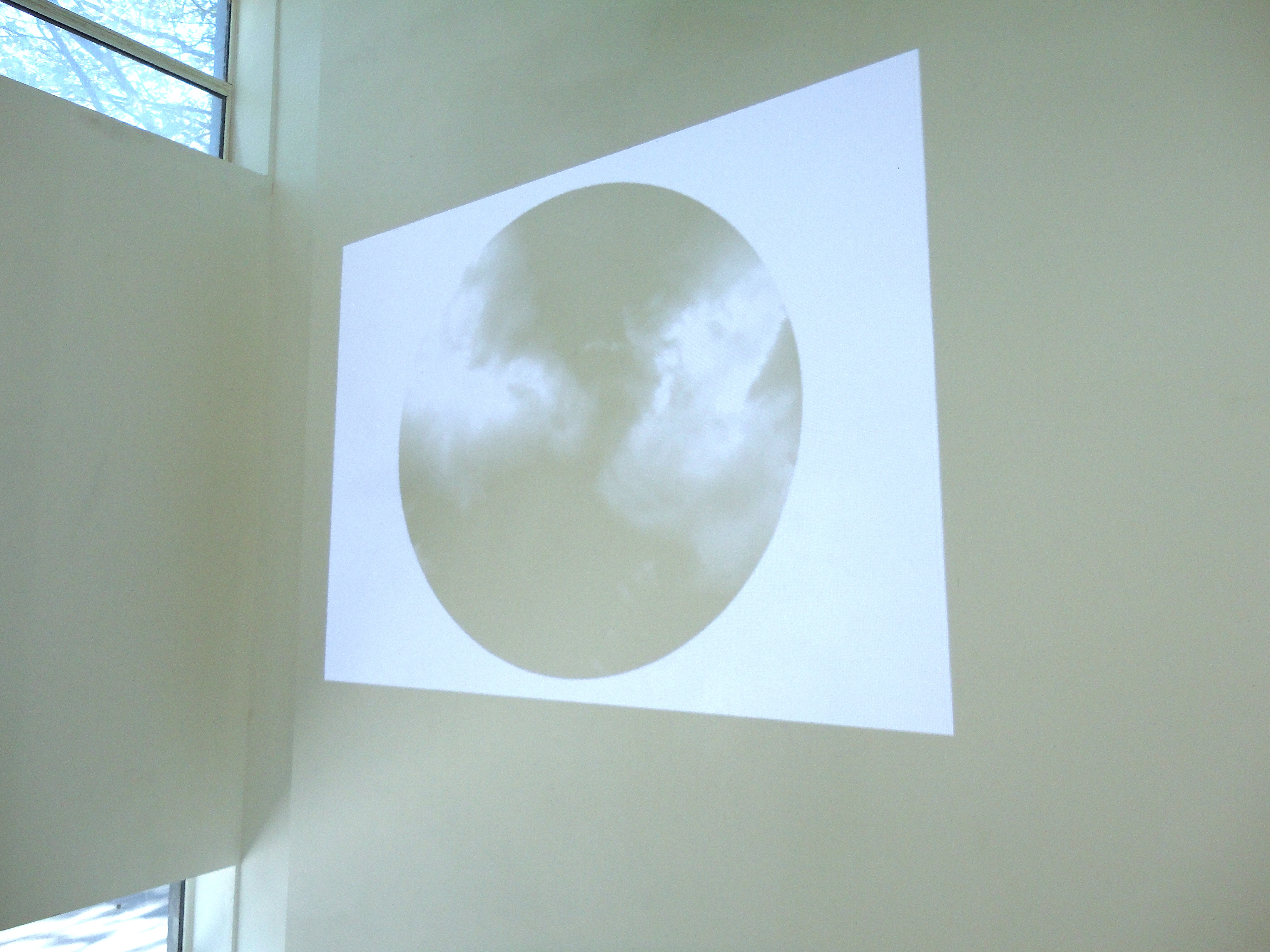
 This is how the piece is looking as an installation. I have become increasingly interested in the origins of environmental sciences and the writings of Robert Angus Smith, the 19th century Scottish chemist who pioneered research on air pollution and acid rain. I am particularly interested in the fact that he refused to take on ‘expert witness’ work as a consulting scientist as he felt those who worked in the courts were often corrupt and committed perjury for paid interests. Because of his integrity as an independent analytical chemist he was chosen to head the Alkali Inspectorate, established by the Alkali Act of 1863.
I started to research more about the etymology of the Alkali with some interesting results. The word derives from the Arabic al qaliy which means the calcined ashes or calcination, more commonly known as potash in early centuries. It was the way soap was produced since antiquity: by heating slaked lime with potash and combining the resultant potassium hydorixide with animal fats, soap was obtained. This lead me to thinking about the basis of most scientific elemental experimentation: acid versus alkalide substances. I went back to my GCSE chemistry for this, to remember that when an acid reacts to an alkali the products are a salt and water.
For the project I am working on for our forthcoming exhibition at New Gallery in Peckham, I have been looking at how acidity and alkalidity are manifested in the natural world, and how these concepts collide with the making of work in printmaking. Traditional printmaking, relies on the reactions of different substances on a matrix. In etching, for example, it is the action of acid on metals such as zinc, copper and steel. We are constantly working on the surface of a plate by swinging between acid substances and alkaline neutralizers. I have been using digital transfer prints, the ink of which often contains ferrous sulfate and a small amount of an acid on acid free hand made Japanese shodo paper- the action of one on the other in layers creates a neutralizing effect and produces an invisible amount of salt and water. I like the idea that there is this small, invisible elemental reaction. The images are of forests, disappearing through logging and acid rain.
I have also been looking at projecting an image of Lake Turkana, a lake in the Kenyan Rift Valley, which has the dual accolade of being the world’s largest permanent desert lake and largest alkaline lake. It is regarded by anthropologists as the cradle of humankind, because of the vast number of fossils found of the earliest humans, not leastly Turkana boy, which is 2 million years old. Yet the lake is hostile to human habitation, with volcanic emissions, venomous reptiles, and unpalatable salty water. It is also the site of a huge Wind Power project with plans to build 360 wind turbines to tap into the particular wind conditions in the area and supply clean electricity to vast areas of Kenya. Science as the new sublime: producing the tools to sustain life while on the other responsible for their demise.
I am interested in bringing these ideas to their most basic aesthetic form- images of these places transferred onto layers of paper or onto the wall itself, in an installation piece. It is an attempt to understand and rationalize the basic process of surviving, and to grapple with ‘the science of the sublime’.
http://www.guardian.co.uk/books/2000/aug/19/scienceandnature
Great article on the contemporary sublime.
I have been looking at the origins of the sublime, Longinus and his rhetorical sublime. First known proponent of a treatise on the sublime, Peri Tou Hupsou, dating back to 1st century A.D, (although neither author nor the date of writing is considered a historical certainty), discusses oratory techniques, referring to the sublime as the “unforgettable, irresistible and most importantly (…) thought provoking” (Lyotard, 1984: 36) figure of speech, which sensationally interrupts or disrupts the discourse. In Nicolas Boileau- Despreaux’s translation of the treatise (1674), Longinus “announces that to attain the sublime effect ‘there is no better figure of speech than one which is completely hidden’ (…) it sometimes even takes the form of outright silence” (Lyotard, 1984: 37). We know in our own linguistic paraphrasing that ‘silence speaks volumes’. It is in the silent realm, therefore, that our perception of the sublime can be found and we can ‘hear the sound of our own voice’ in an interior mapping of our fears and their consequences:
Silence indicates inevitable gaps in our comprehension, gaps that should be respected, rather than bridged (…) the sublime is a name for one kind of gap. Auschwitz indicates another of these gaps. Both the sublime and Auschwitz form unspeakable points of discourse, disruptions in the course of our sentence, that should be respected as such (Renne Van de Vall, ‘Silent Visions- Lyotard on the Sublime’, The Contemporary Sublime, Sensibilities of Transcendence and Shock, Art and Design, Volume 10, no.1/2, edited by Nicola Hodges, Jan-Feb, 1995, pp. 70
The sublime experience depends on our inclusion in a metaphorical “push of question and answer exchanges”, as Longinus termed it, “generated when the past is thrust into the present” (Cliff McMahon referencing A.O. Prickard’s translation ‘Longinus on the Sublime’, Oxford University Press, 1926, pp.13-49, in The Sublime is How, ibid above). Longinus’ concept was one of cognition. If it is true that: ‘landscape can exist as a reflection on the inner walls of the mind, or as a projection of the inner state without’ (Bill Viola, 1995), then is the contemporary sublime a cognition of our communal terror of the finite nature of future landscapes? As David Blayney Brown asks (2004), “Is this because we sense a great change coming? Do we want memories or reminders before disaster strikes?” In a contemporary sublime, our participation is no longer conditional on a safe distancing, but is a recoginition of our own memeto mori, a memorial to the memory of a time when our landscapes were to be marvelled at, rationalized and which are fading fast.
These are the ideas I am trying to work with in my landscape installation pieces. While the notion of impermanence and permanence, and memory impregnates all my work.
In relation to this the work of Mariele Neudecker’s Unrecallable Now, at Spike Island in Bristol (1998) and Noemie Goudal’s Les Amantes, (Cascade) (2009) which is currently being shown at the Saatchi Gallery as part of the Out of Focus, contemporary photography exhibition, deal with issues of the contemporary sublime, subverting the parameters:
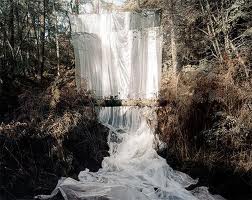 Naomi Goudal
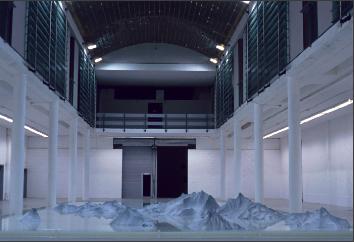 Mariele Neudecker
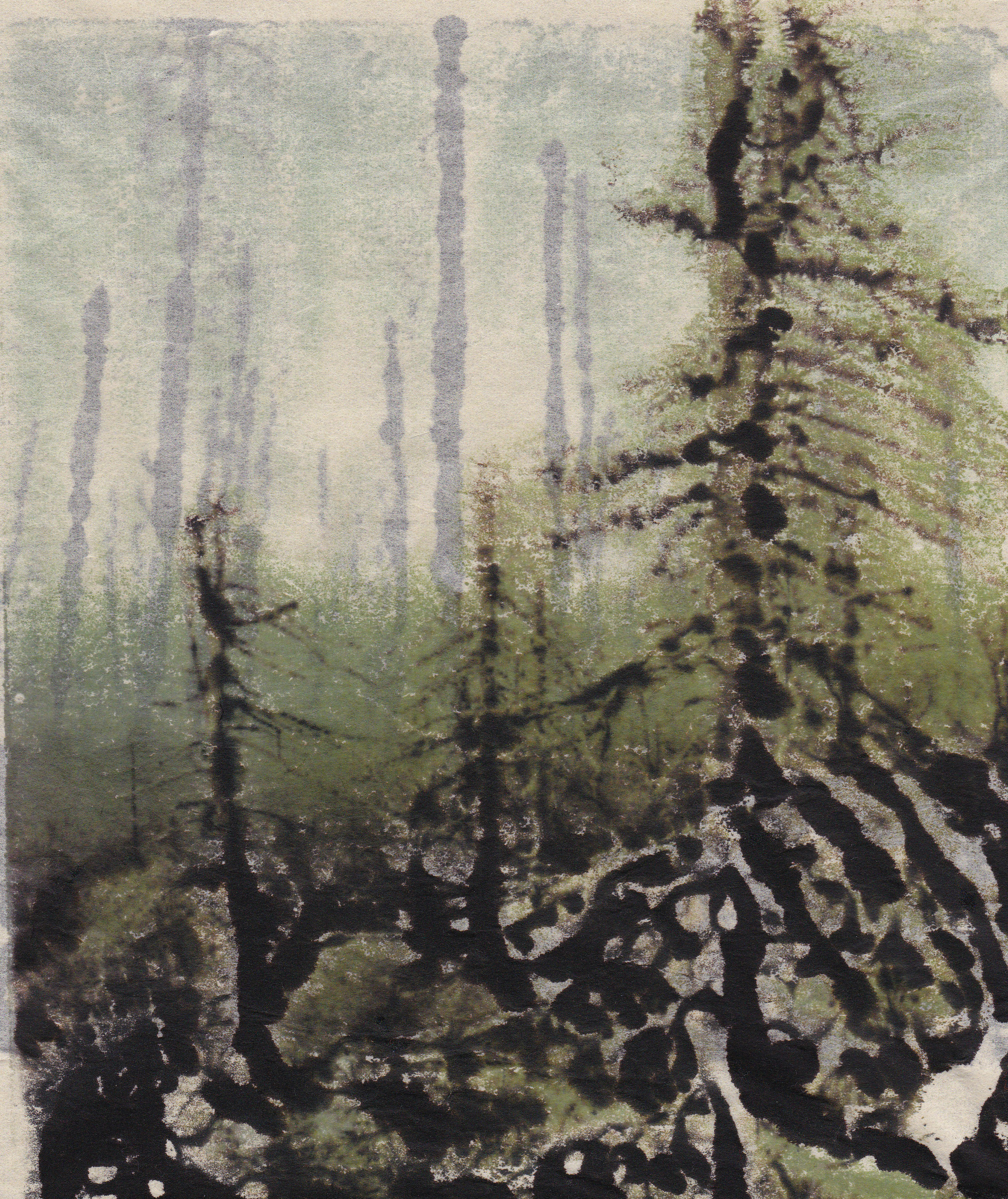
Digital transfer Print, Japanese shodo paper in layers
I am interested in the symbols and subjects of the Romantic period, and translating them into a contemporary environment. Here the layers of Japanese paper work on the translucent surface of the transferred image to create depth.
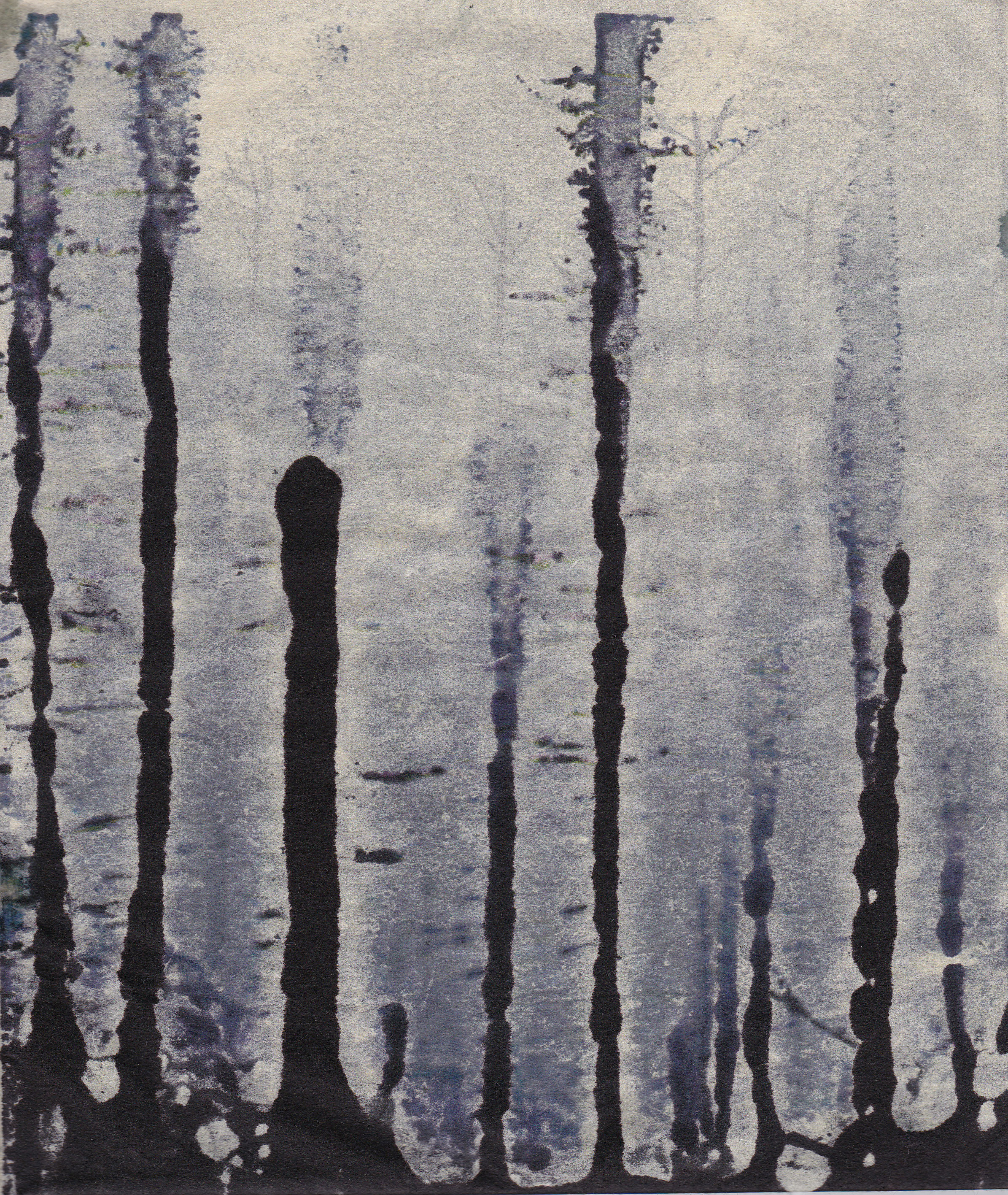
Rather than sublime in its aesthetic sense, it is sublime in its etymological sense- sub- liminal: below the threshold, at a key moment when things are changing and we are becoming more aware of it. Where travelers in the 18th and 19th century were confronted with the environment as a frighteningly new place making it the subject of much of the writings and paintings of that time- now the environment in its more frightening aspects is coming to us. The forest, however, traditionally a place of dark mythology and folklore, here is a sparse and crumbling landscape, and represents a dystopia and disillusion with the tropes of another age.
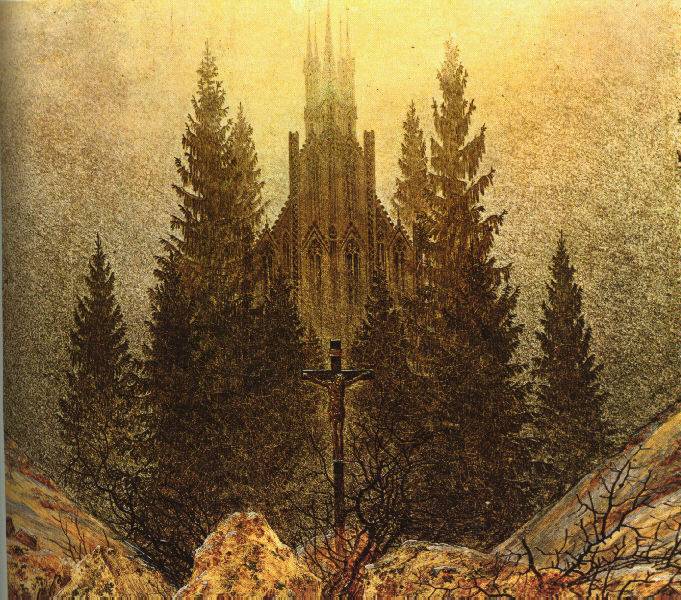 Casper David Friedrich, 1812- http://www.ibiblio.org/wm/paint/auth/friedrich/
“Clouds of any one of the aforementioned modifications [of the Nimbus or Raincloud], at the same degree of elevation, may increase so much as completely to obscure the sky: (…) and the effect of this obscuration may be such as would induce an inattentive observer to expect the speedy fall of rain.” (Forster, 1823: 31) . I have been reading Thomas Forster’s Researches about Atmospheric Phenomena, in which he details his observation of different cloud formations. He also details a day to day calendar of weather for 1819- 1823 in the back of the book. Looking at the date today in 1819 he writes, “A fine warm spring day, after a night of rain. Schoeniclus arundinaceus observed. Swallows and Martlets become common. Orchis morio in flower.” Been observing the sky myself- nimbus every day, covering the sky for the last few weeks, with the sound of aeroplanes as they appear between the layers of clouds. Can’t say that it has been a warm spring day today. E. Rubecula (robbin red breast) observed and magnolia in flower. Also five fox cubs playing amongst the pampas grass. In 1820, however, the weather seems to fit more accurately what I am experiencing in 2012: “The day was cloudy and cold, with South Wind, followed by Rain and Gales at night.”
A quote from http://www.islandnet.com The Weather Almanac:
One of the great British artists and a forerunner in true plein air oil painting, John Constable added a scientific eye to his art. Influenced by Luke Howard’s 1804 essay Modification of Clouds classifications, which became known during his midlife, Constable often noted the weather conditions prevailing during his plein air painting sessions on the back of the canvas. It was said that later in life, he could reproduce a skyscape directly from his observational notes. Constable admitted in an 1821 letter, “I have done a good deal of skying”
Eric Sloane asserted he had coined the term skyscape to describe his style of sky/cloud paintings. But a century earlier, Constable gave sky/cloud paintings a name when he coined the term skying to describe his artistic focus on clouds. His obsession with clouds was such that from 1820 to 1821 he focused a series of paintings and sketches — numbering around 50 — looking upward from the English landscape that combined the naturalist’s eye with the artist’s. And like Sloane, who studied meteorology at MIT for a time to better understand the sky, Constable studied the writings Thomas Forster’s Researches About Atmospheric Phaenomena, a popularization and extension of Luke Howard’s 1804 essay Modification of Clouds. The annotations in his copy of Thomas Forster’s book indicate he kept abreast of the state of the science, at times even arguing with Forster’s interpretation.
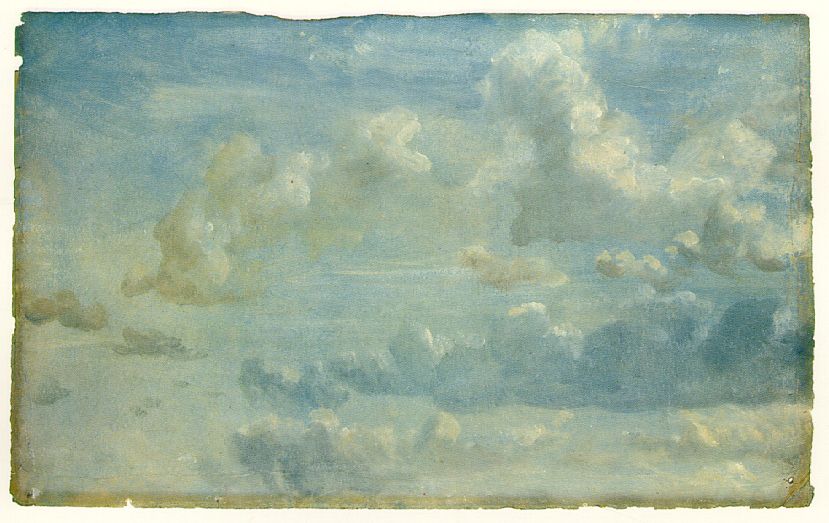 Constable Cloud Study, 1822
“Among Constable’s contemporaries, the English Romantic poets also had a great deal to say about clouds. Wordsworth famously “wandered lonely as a cloud.” In Shelley’s “Mutability,” clouds, as often in Romantic poetry, are an emblem of evanescence and change; in the second section of his “Ode to the West Wind,” when Shelley turns from wind-driven leaves to clouds, they become symbols of our own fleeting selves.For Coleridge, clouds were emblems of freedom, as in his ode to France—”Ye Clouds! that far above me float and pause,/ Whose pathless march no mortal may control!”—or of poetic consciousness, as in “Dejection.” (Christopher Benfey, Head in the Clouds, http://www.slate.com)
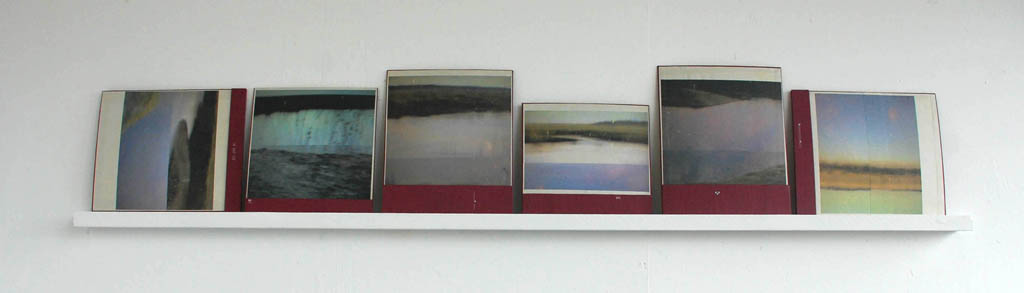
Lacuna– 6 photo-collages on handmade book covers
Lacuna, refers to a neurological condition- a gap in our memory- that often occurs after trauma. It also references the etymology of the word ‘lake’ : lacuna/ae (Latin). Here the images are all of vanishing and reappearing lakes (Loughareema, in Ireland- Bernardo O’Higgins, in Chile- Lake Jackson, Florida- Lake Peigneur, in Louisiana)- a metaphor for remembering and forgetting. These bodies of water have changed their status as a result of man-made environmental factors (reservoirs built, mines and oil platform collapses, melting glaciers, roads). The ‘gaps’ in memory are also found in the making of the piece. Here six photo-transfers are scanned and reprinted onto book paper, then mounted on cardboard and book cloth. Each layer reduces the surface of the original, while picking up textured remains on the surface of the scanner and on the surface of the paper. The printed palimpsests work together with small archaeological symbols that refer to the unusual geological features of each lake.
I have been researching archaeological drawings for this piece- they are extraordinary drawn records of the layers of an archaeological site- often created free hand with each layer drawn as it is found on a particular kind of tracing paper. The layers are then put together to form a single image. Also the symbols used to denote different terrain or objects found is like a language in its own right and fascinating to look at from a purely aesthetic point of view.
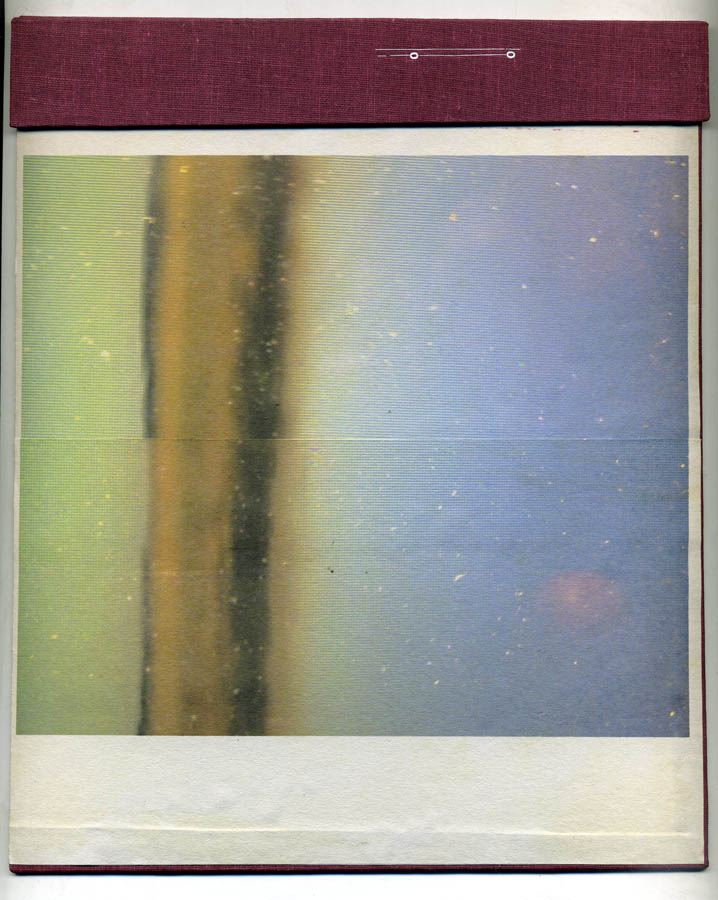
In order to get to this as a final image, I first went through a multitude of different versions, on tracing paper, transparent paper, moving the ink around the surface of the transfer. Although these were interesting experiments, I ended up coming back to the original images and starting from scratch again to find the particular, mediated quality I was after.
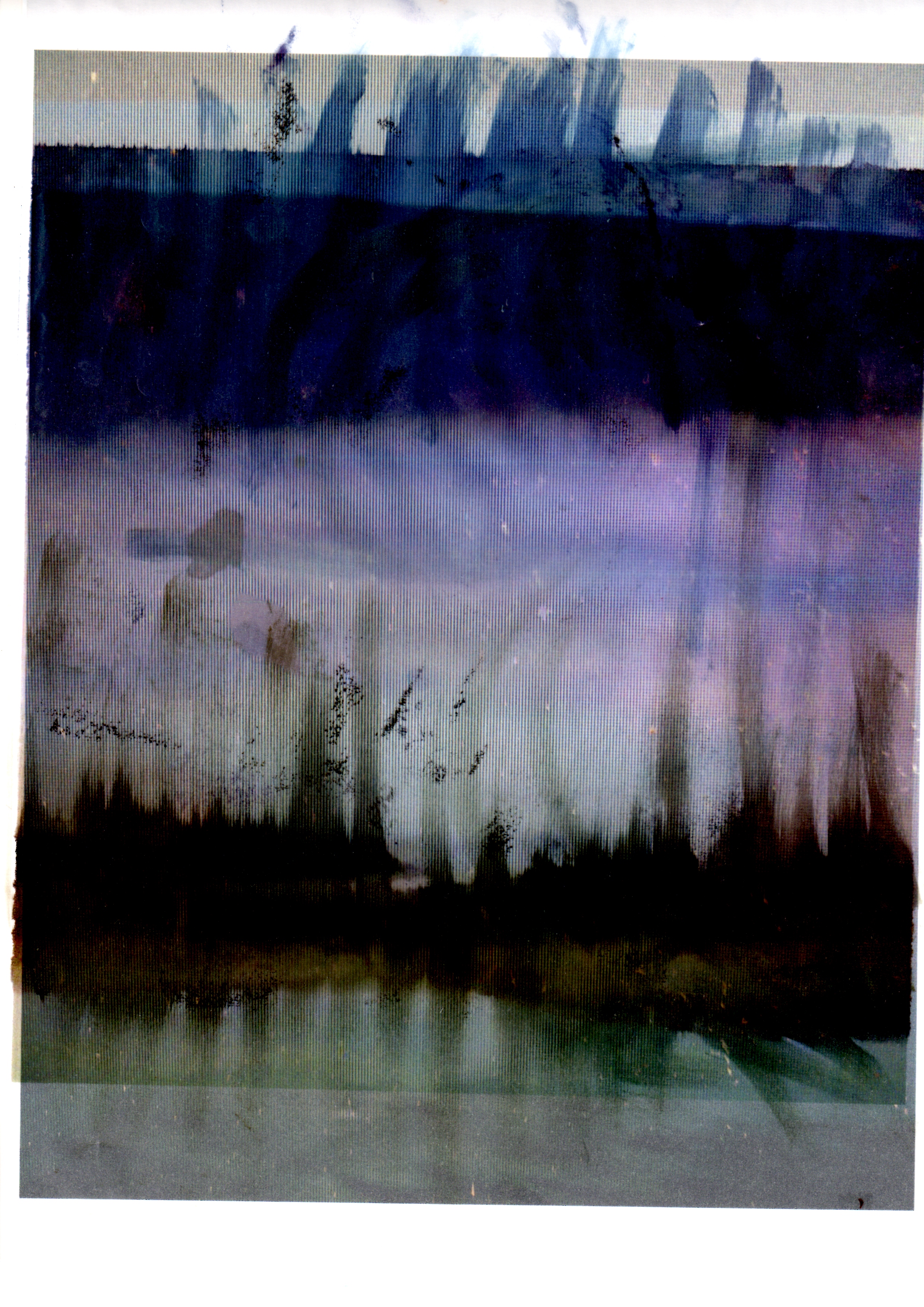 Here is an example (above) of the images created by ‘smudging’ the wet ink on the surface of the transfer, abstracting the subject and giving it a painterly feel.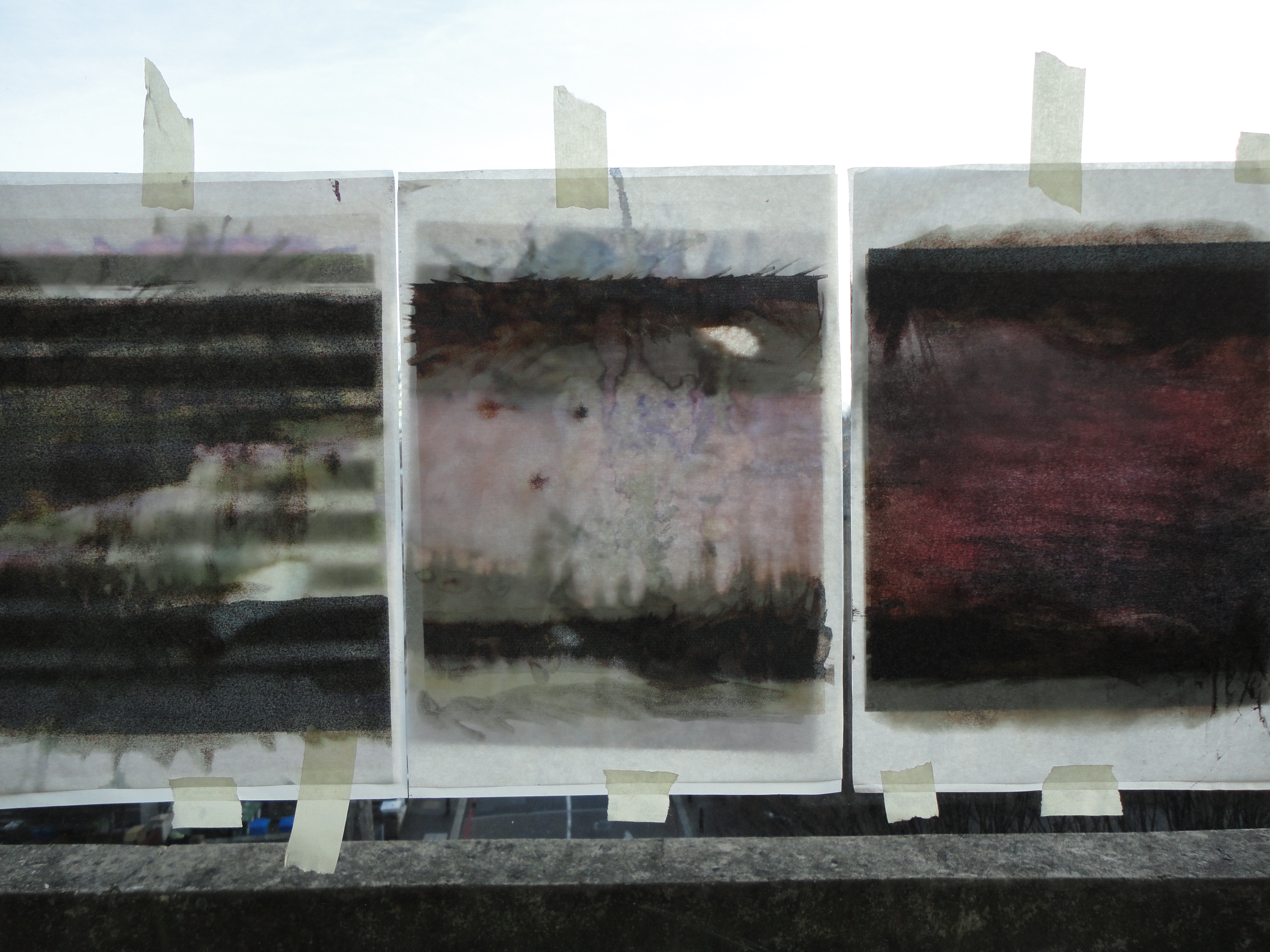
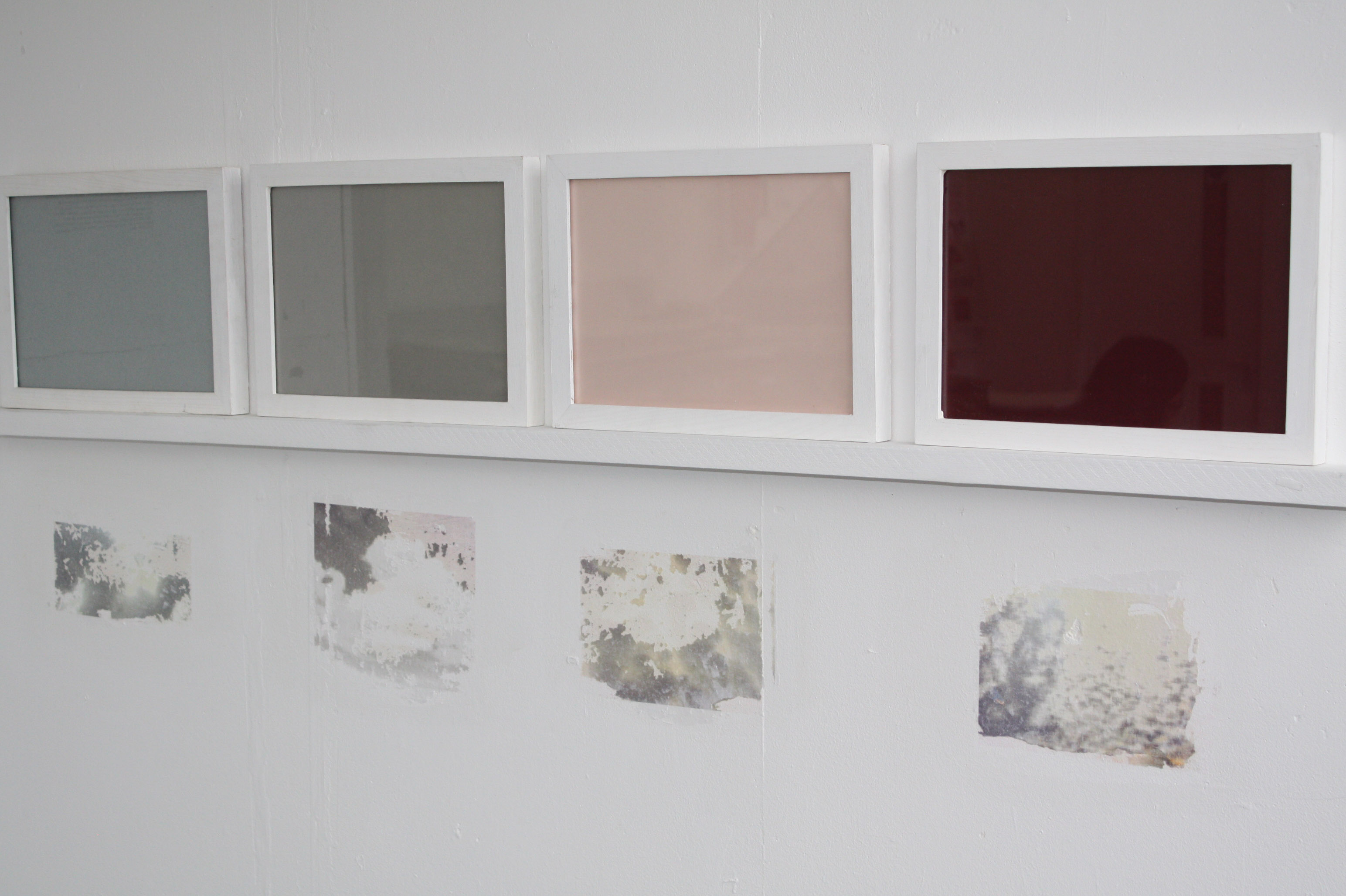
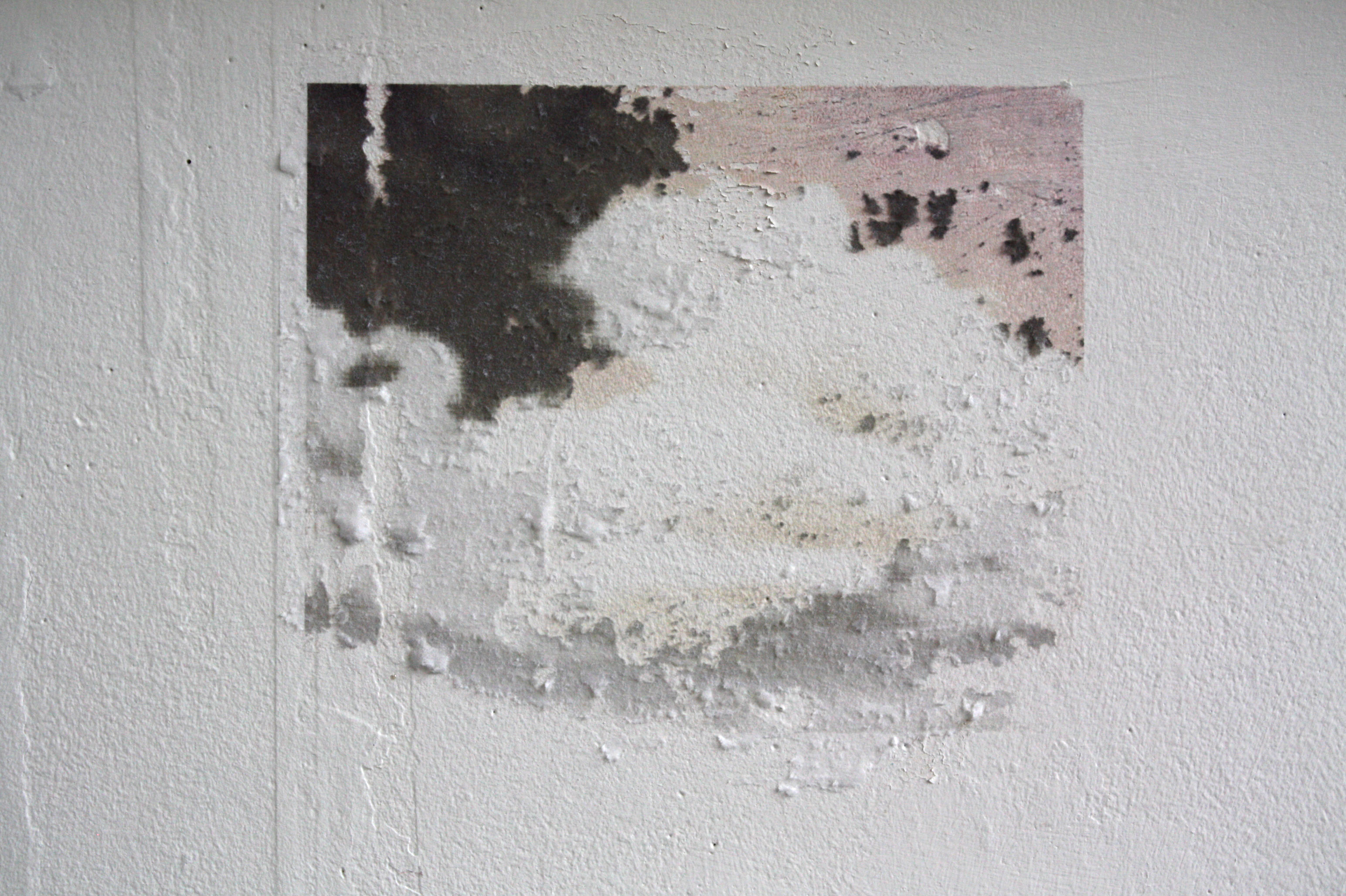
In Nebula photographs of clouds over south east London are transferred onto the wall and hang below lithographs of solid matt colours. The images reference Constable’s romantic cloud studies, while questioning what looking at the sky means in the 21st century: with airplanes that menace, and changing environments, the sky is a place of fear rather than contemplation. The colours appeal to a nostalgic longing for a time when the clouds meant sublime melancholy. The piece plays with ideas of permanence and impermanence, as the wall images deteriorate and change with the light, while the lithographs remain static. The lithographs represent the essence of the light reflected in each of the clouds.
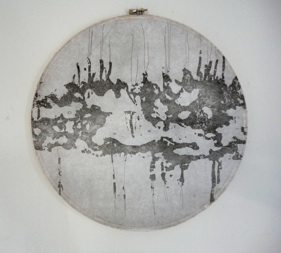
http://www.metacafe.com/…/circular_painting_the_tondo/
The name ‘tondo’ comes from the Renaissance period, and is “the ultimate in constructed painting. It is demanding both formally and metaphorically” (William Zimmer, The Tondo, in Art Journal, Vol. 50, No. 1, Constructed Painting (Spring, 1991), pp. 60-63-Published by: College Art Association).
Zimmer goes on to say that, “the tondo is the most harmonious and self-contained of shapes, but it is also the most radically demanding. The shape comes first, and the content submits to it, or else balks in opposition” (pp.60)
For me using the support of an embroidery hoop meant that this sugarlift etching on Japanese shozo paper takes on the shape of a ‘tondo’, while denying it as well- It is a support that reminded me of an intimate and solitary act- that of sitting doing embroidery, while in this case the shapes of the etching and the stretched, translucent paper work to bring a delicate hand made feel to the piece. The image is a meditation on a the light as it plays on the surface of water. It was my first piece using sugar lift as a technique and the results on the paper were varied at first. Once I had printed a dozen or so, I then chose two that I thought would work best in terms of their tone to cut and stretch onto the embroidery hoop. Here is the other one:
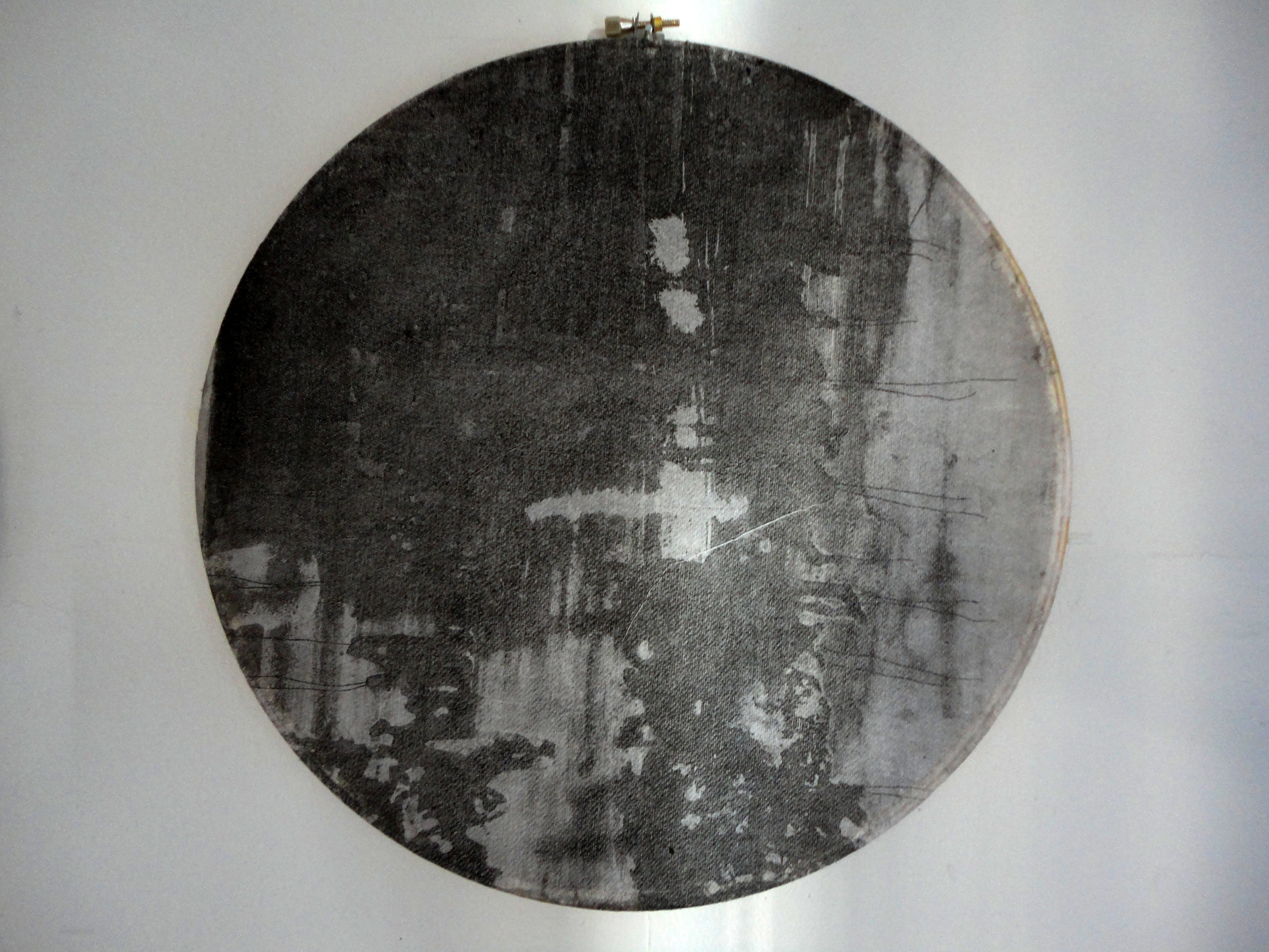
They seemed to work well as a pair, although there was some criticism of the embroidery hoop as a support. I created more of them, smaller and larger versions, but haven’t felt able to exhibit them together. These other versions work best on their own and there is nothing to gain from placing them together, as I had originally planned. The tondo was always a deliberate construct and perhaps Zimmer is right when he says that the content submits to the shape.

 Victoria Ahrens