Author: victoriaahrens

  • Clifford Chance show

    Clifford Chance Purchase Prize 2013CC Postgraduate Printmaking invitation 2013 2CliffordChance1

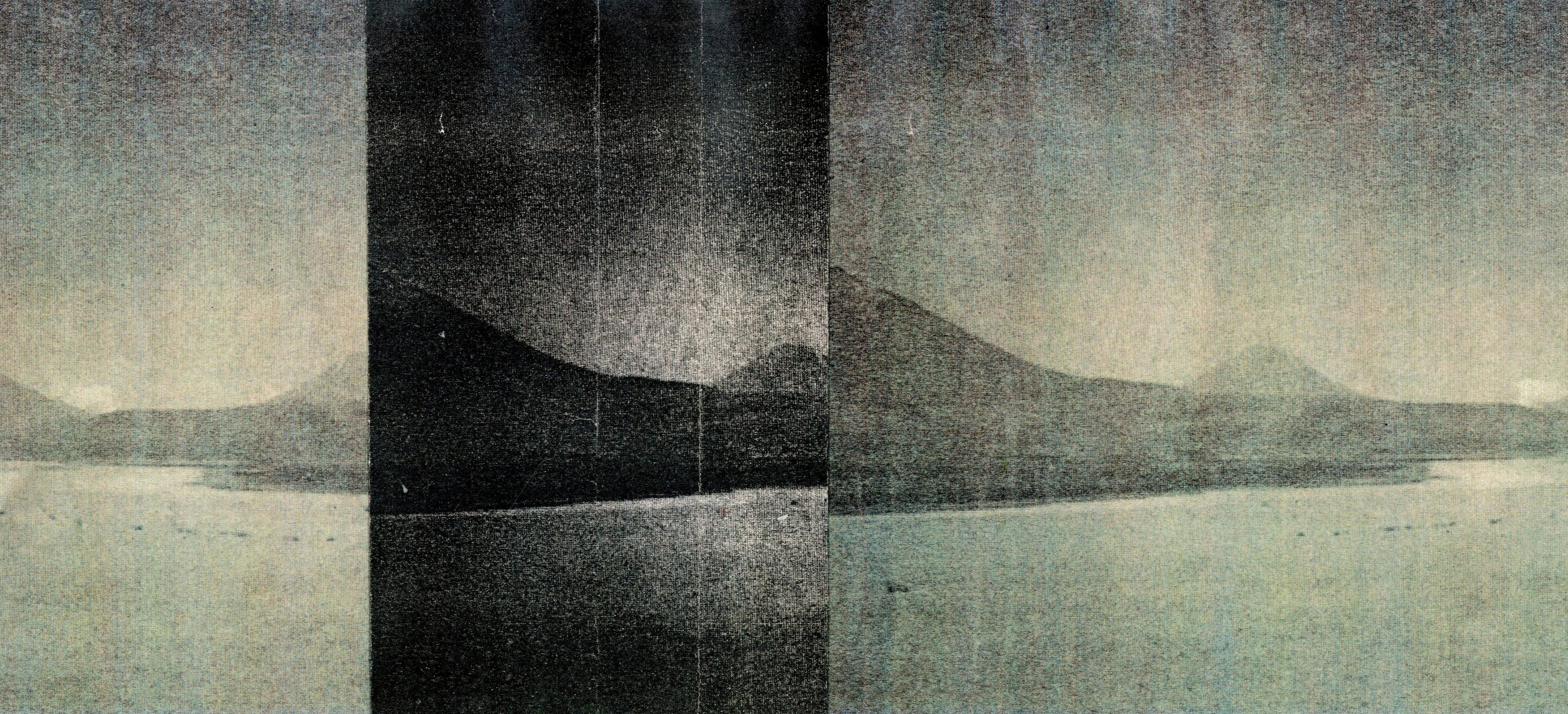
    Arkadia (2013)C-type Print of press transferred film stills, on copy paper 300 cm x 120 cm

    Selected for this show by Nigel Frank to represent Postgraduate Printmaking in London- the show opens on 13th November on the 30th Floor Gallery. Also showing are Paula Bourke-Girgis, Joanna Brinton, Jude Cowan Montague, Hanne Lillee, Leah Miller-Biot, Michael O’Reilly, Yanna Soares, Georgina Tate, Ines Tavares, and Nicola Thomas. I was selected as the Clifford Chance Purchase Prize Winner 2013.

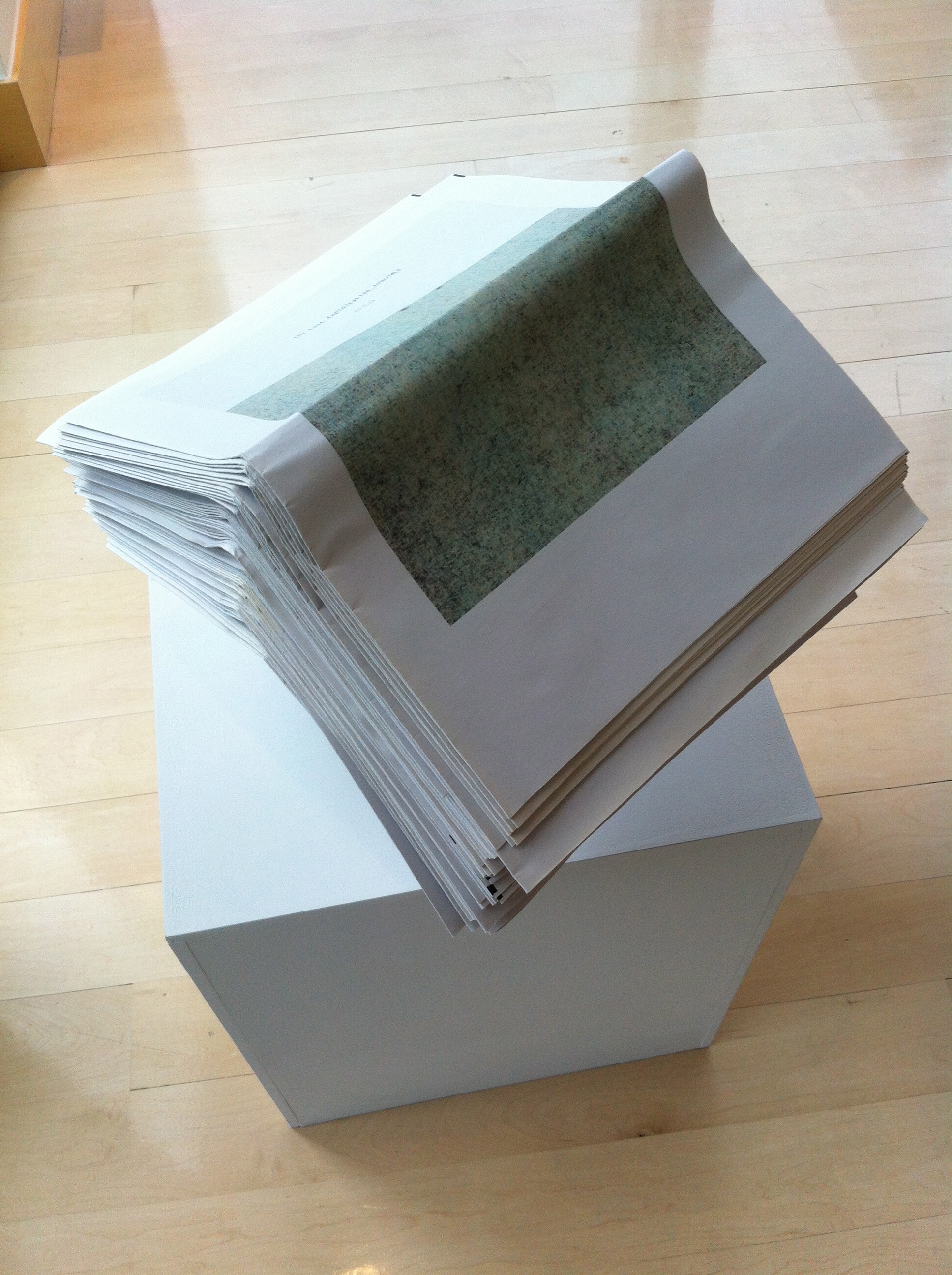
    IMG_1252The Lost Exploitation Journals (2013), 300 newspapers, plinth- for the public to take, creates strata that are distributed outside the gallery space

  • Pushing Print 2013

    Pushing Print festival in Margate 2013, with exhibitions at the Pie Factory and Margate Gallery. My work was selected for the Pie Factory and I was pleased with the display and feedback. Margate, having never been before, proved to be a quirky place with, as Turner would have us believe, spectacular skies:PushingPrint4

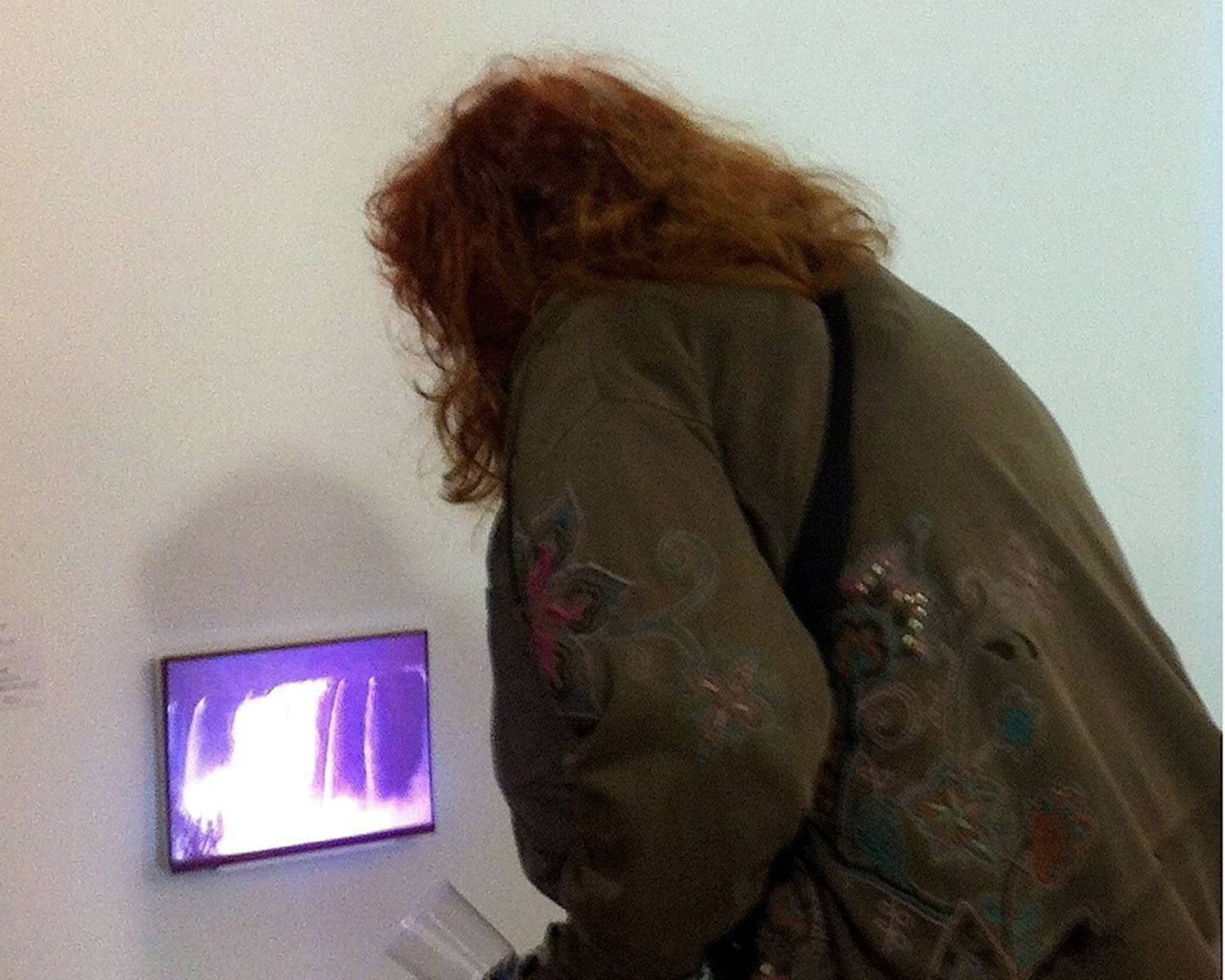
    Naipi and Taroba (2013) Projection of waterfall, backwards on hand made book cover

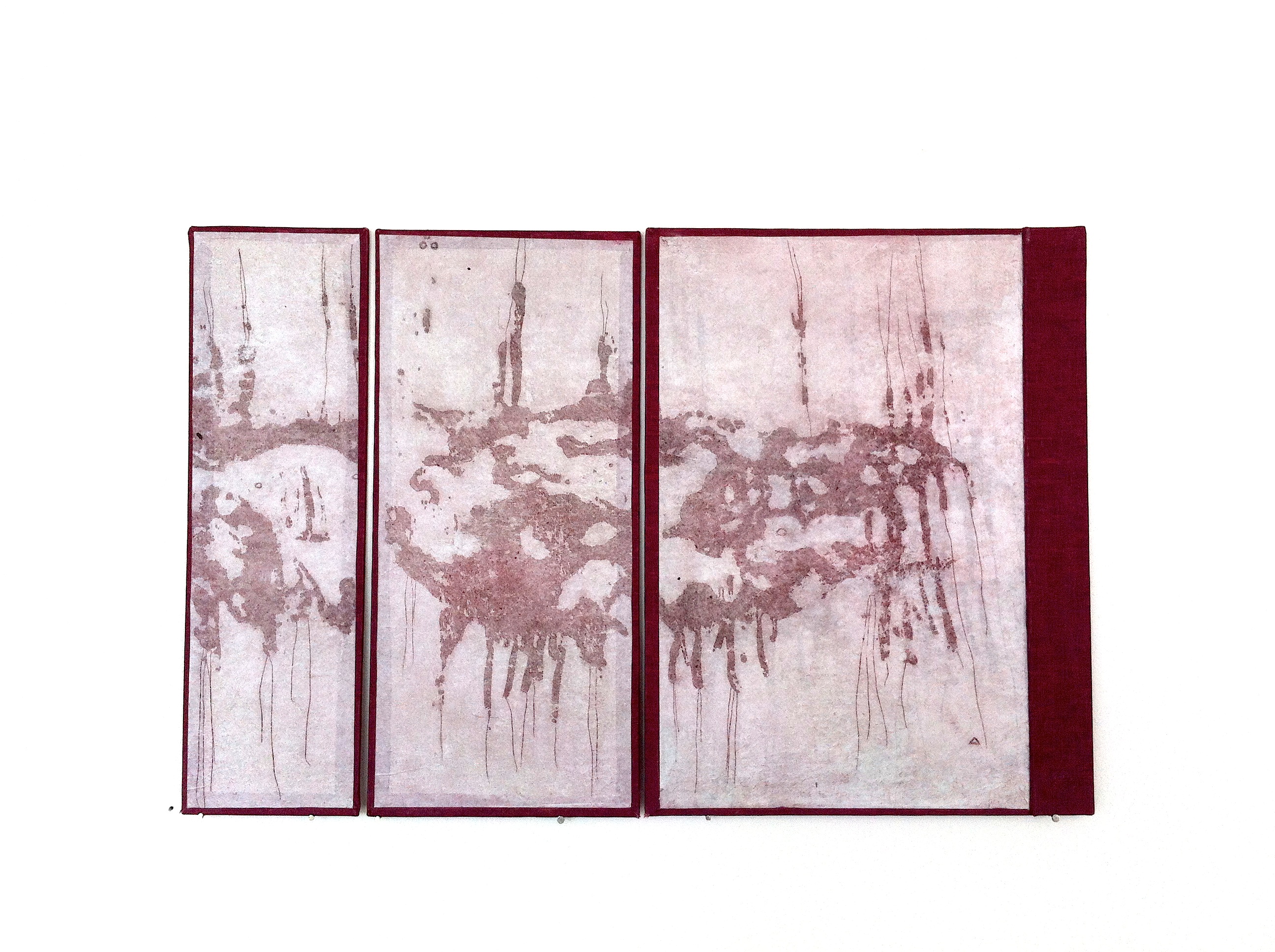
    PushingPrint3Casper’s Forest (2013) Transfer print collage on Japanese Shozo paper, completed with found book, shelf

  • Abandum

    IMG_1087Arkadia (The Lost Exploitation Journals) 2013

    Installation of four digital prints, two projections, 600 newspapers

    Although I have worked with this image before, here I was interested in re-fragmenting the piece into its constituent parts. The idea of the banner has an interesting etymology from bandum (Latin), for the cloth that is made into a flag. But it also is the basis of the word abandon which is ‘against the bandum’ or to be disloyal or disobey orders of the flag (of authority)- these banners are, therefore,  banners of abandon. There is a lovely correlation between the initial ideas and the format  in relation to this concept of abandoned spaces/ the political dimension: the history of the use of banners in May Day processions/ by trades unions in the 19th/ early 20th century – where the environment was being changed forever by the industrial revolution, with new mills, factories and mines. The use of banners in commercial printmaking for all kinds of uses also connects the work to both the history of printmaking as well as the its use in contemporary advertising etc- Here the banners allude to the arbitrary division of geographical borders and the loss of the our relationship to the environment. This piece won an award from the Printmakers Council 2013.

    award1IMG_1083Installation shot, Abandum Arkadia (2013) banner prints, 600 newspapers and projection, Gaerd (2013)

  • The Lost Exploitation Journals

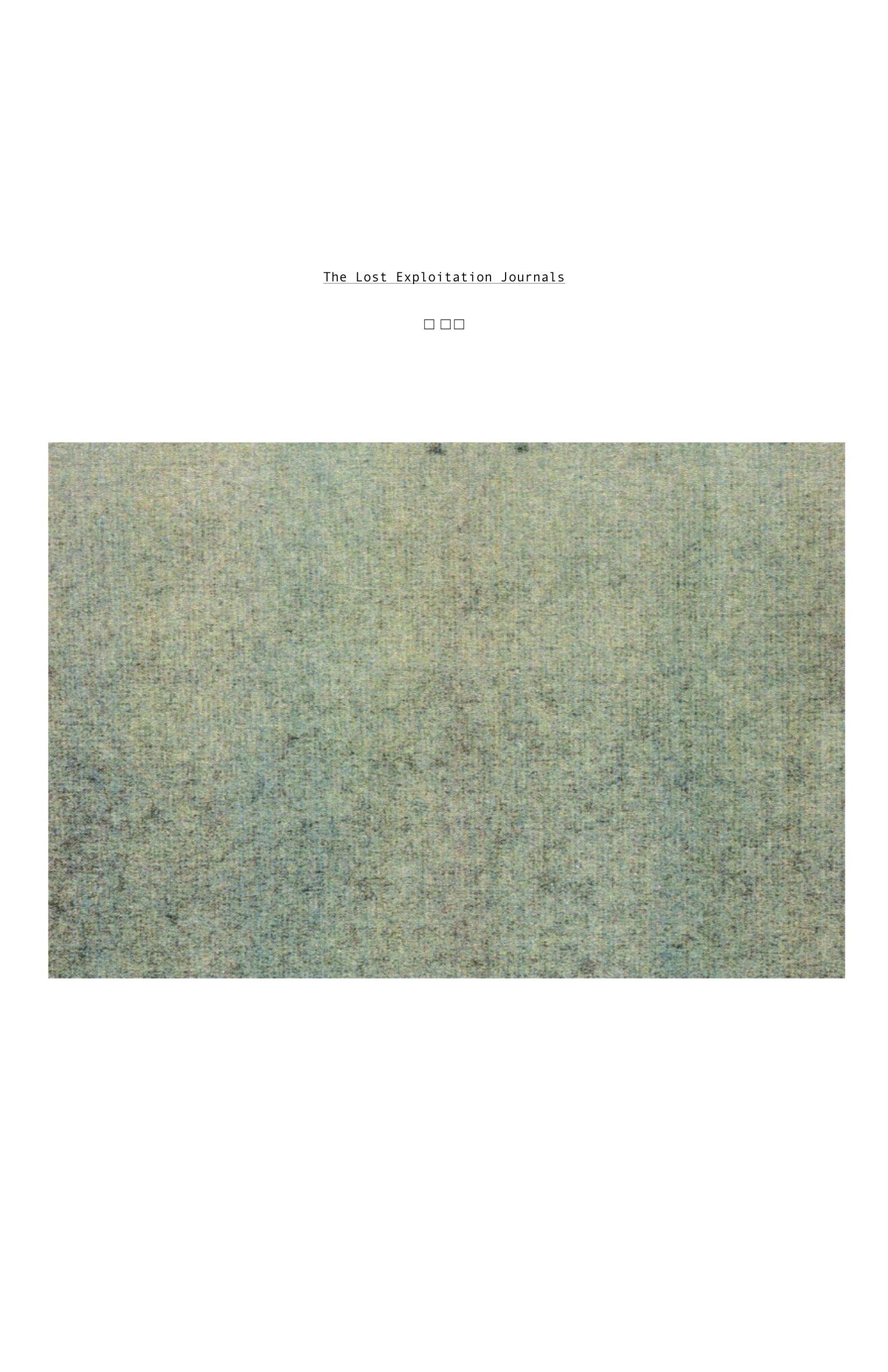
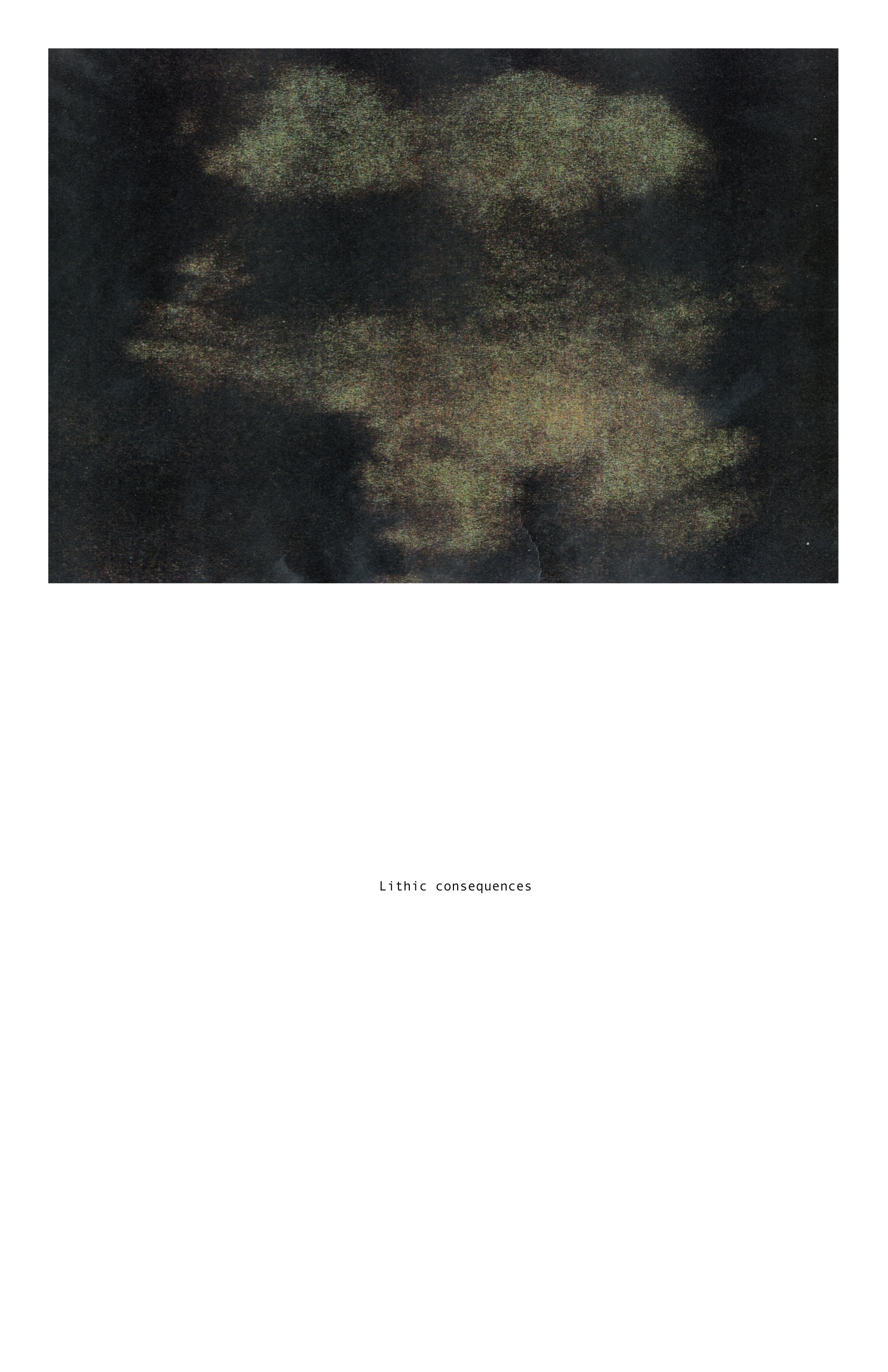
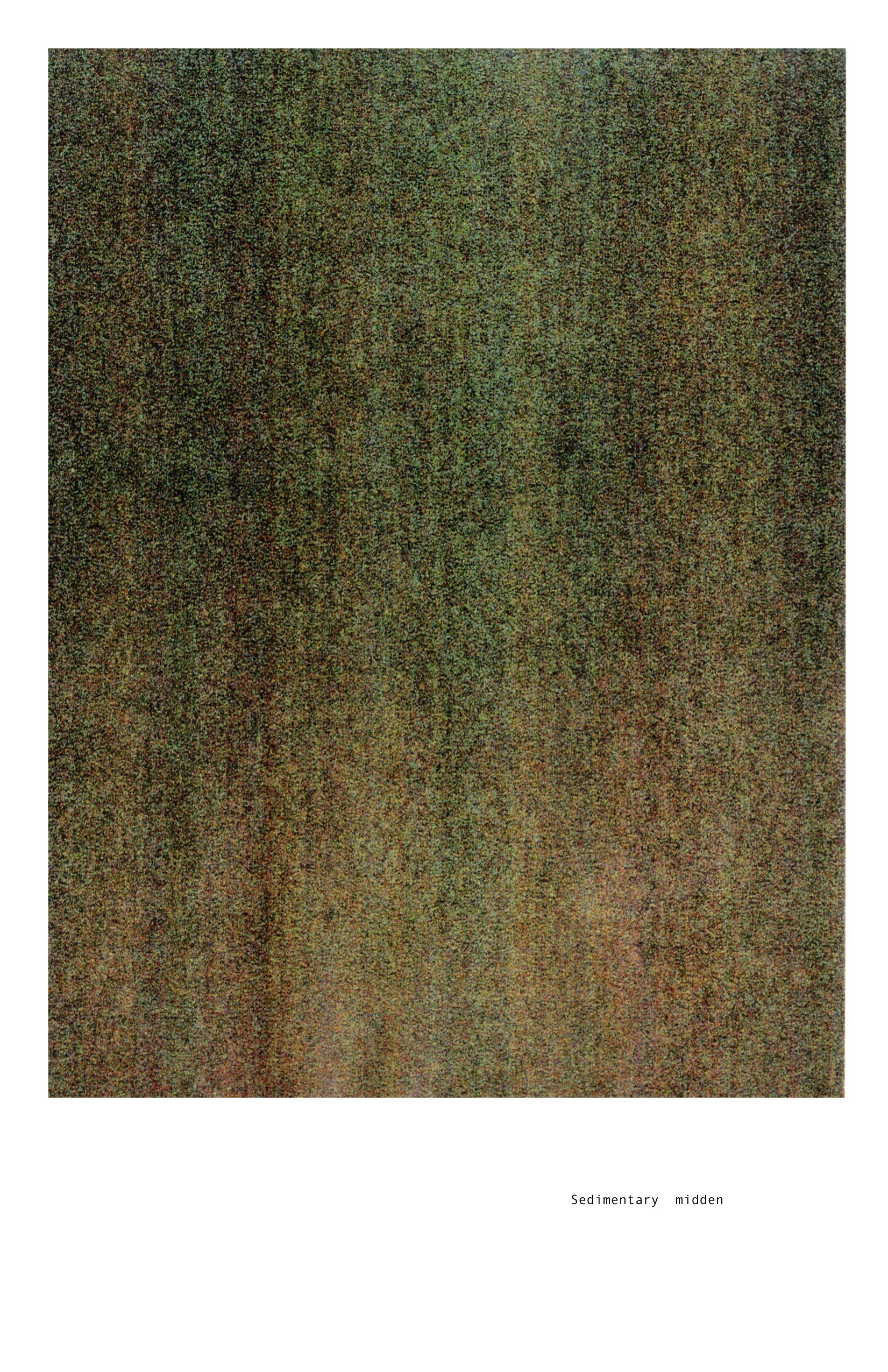
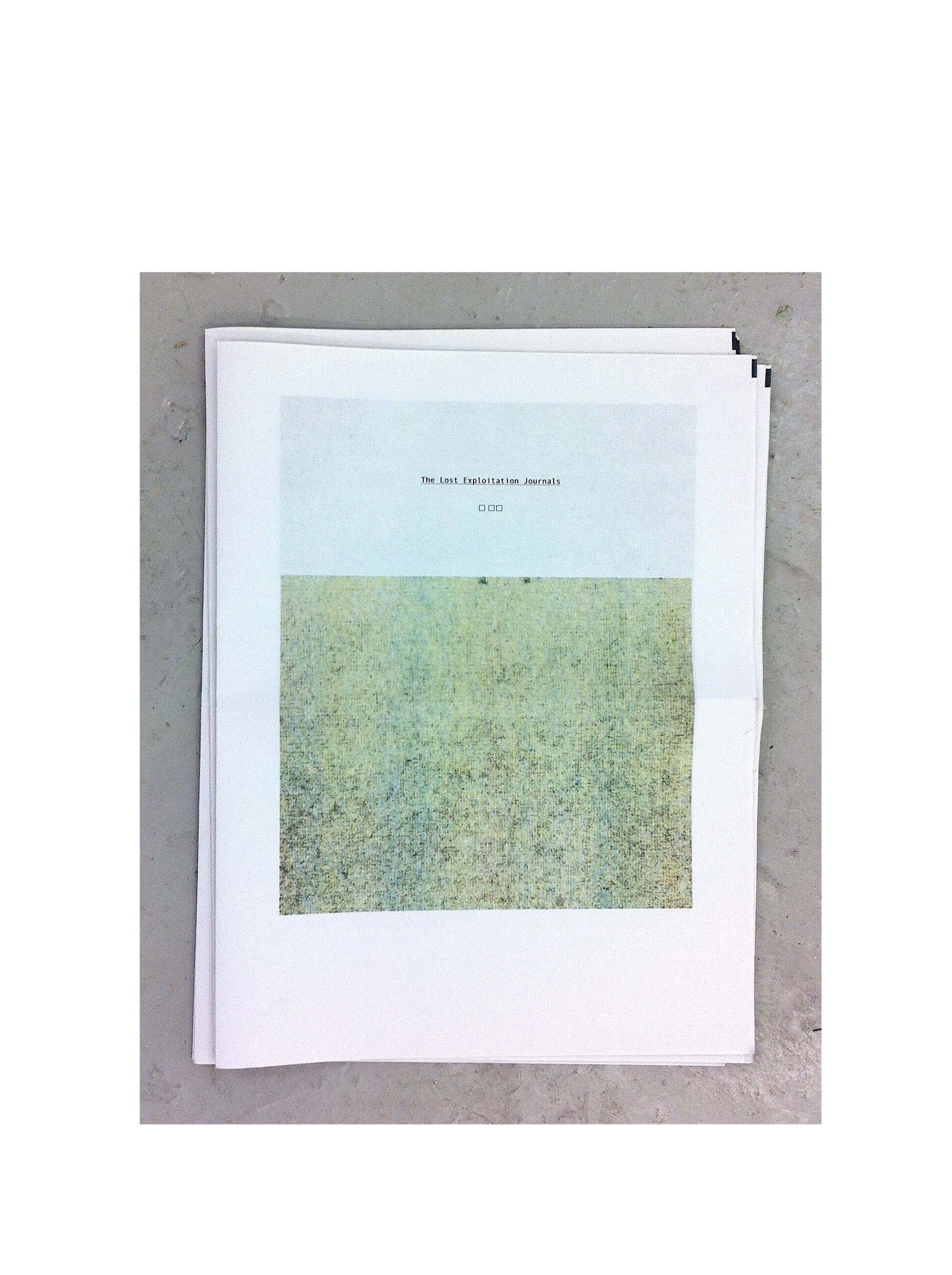
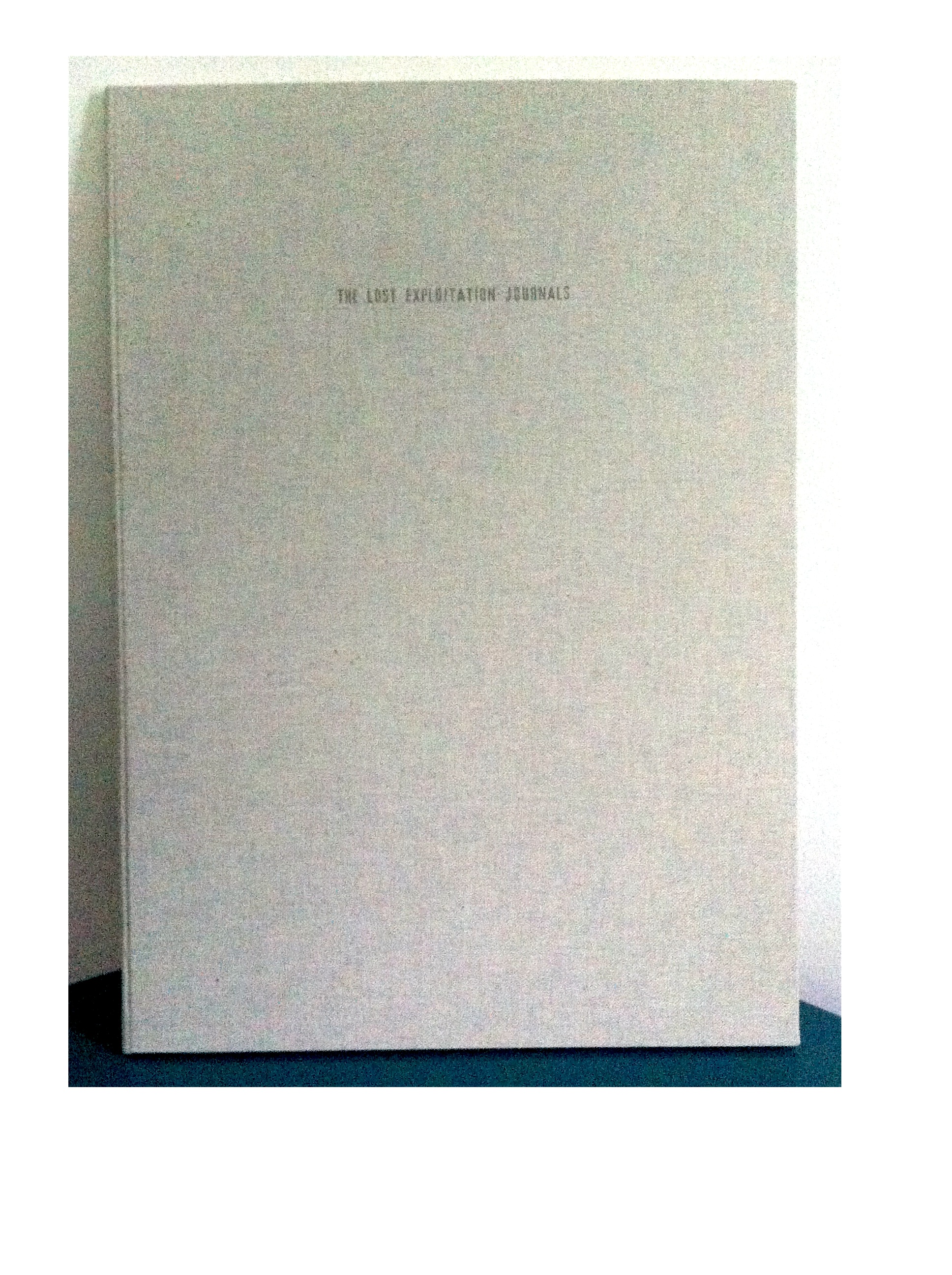
    I have wanted to make a book using some of the images I have been producing during the last year. Here it is- finally finished- The Lost Exploitation Journals. I have created 600 newspapers, and 5 editions in hard back for sale-this is a culmination of ideas using abstracted imagery from film stills, transferring the images through the press and then scanning them to print them onto A3 Fabriano paper. There are small clues throughout that tell you something about its content, small geological phrases and cartographic coordinates- here are a few of the pages:

    The Lost Exploitation JournalsThe Lost Exploitation Journals2The Lost Exploitation Journals3

    Here is the newspaper version:

    newspaperversion1and here is the bound hardback book:

    hardboundcopy1

  • Alma

    alma3003ALMA- this image is of ‘The Atacama Large Millimeter/submillimeter Array (ALMA), an international partnership of Europe, North America and East Asia in cooperation with the Republic of Chile, is the largest astronomical project in existence. ALMA will be a single telescope of revolutionary design, composed initially of 66 high precision antennas located on the Chajnantor plateau, 5000 meters altitude in northern Chile.’ (http://www.almaobservatory.org/)

    Alma also when read as one word, means SOUL. I thought this was appropriate for my project about the Atacama, where these telescopes hide in the middle of the desert behind a mountain range. I used found images to create a photo etching on two plates. The etching will be part of a series on this technological landscape that is mapping the heavens in an unprecedented way- to find the origins of life and the universe.

    These smaller prints are now being turned into a large 100 cm x 70 cm photoetching. Its the largest plate that can go through the presses at Camberwell, and the largest plate I have ever attempted. Just exposing it, and developing it in itself poses all kinds of challenges. I have now started to print them using a velvety black RSR ink- it takes about an hour to ink up the plate and polish it before pulling the print. Here is the process as it happened:

    IMG_0828

    IMG_0830IMG_0831IMG_0836

    This print has been the most enjoyable piece for me- hard work in the heat of the Summer in the print workshop, but very satisfying. Tried it on Hahnemule paper at first, but once I put this up against the wall i realized I needed a whiter paper- have now printed an edition of 5 on Fabriano white, which have come out really well.

  • Geard (2013)_ii


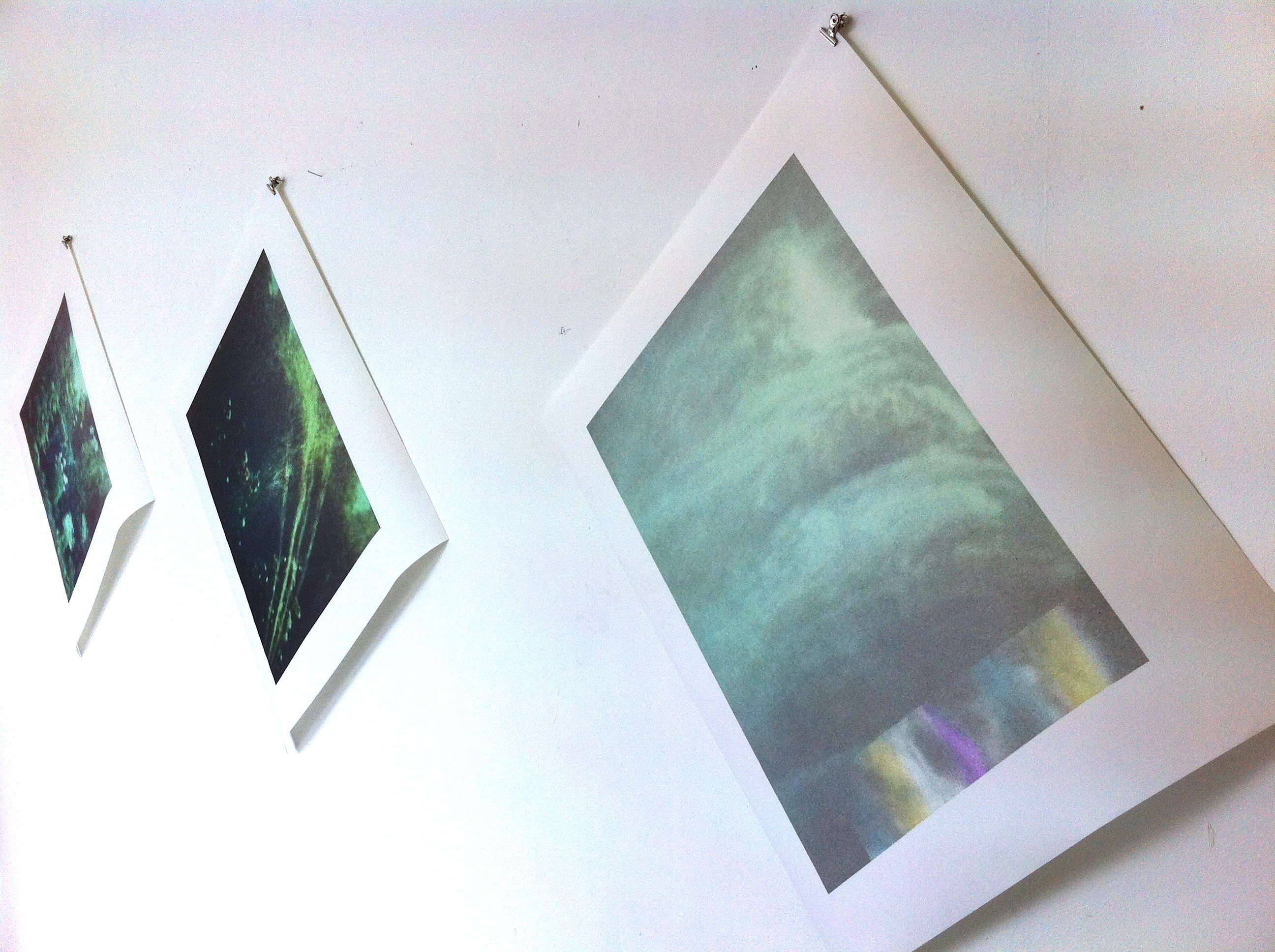
    Photographs through the screen- close ups taken of a projected image on Japanese paper, then turned into prints- second stage of the new project Geard (2013)_ii:

    ProjectionONeTrying out different display methods, from projection to digital prints on Hanhemule rice paper- I like the casualness of this display:

    lejardin1


  • Geard (2013) _i

    Working with old Sony portable monitors to present found footage- the juxtaposition of a garden with its sprinkler (artificial and manmade) and the waterfall (natural sublime)- mediating the mediated image- through the screen- I’m interested in how our viewing of the material changes when the work is presented through a screen:twoscreens1


  • Naipi and Taroba (2013)

    waterfallphoto1Naipi and Taroba (2013), looped projection onto handmade book cover

    In this piece, part of The Day Remains_ii at the Peltz Room Gallery at Birkbeck School of Art (43 Gordon Square, WC1H) I am continuing to work with liminal spaces. The projection of the waterfalls moves in reverse, metaphorically taking the water back to its source. The images refer to the Iguazu basin and part of the waterfalls that create the frontier between Brazil, Argentina and Paraguay. Some of these have disappeared over time, the Guaira Falls- which were destroyed as part of the Itaipu dam project which now provides most of the hydroelectricity for Paraguay and the south of Brazil. The footage comes from a 16 mil. film strip I found that my grandfather had taken of these waterfalls- most of the footage was in a relatively poor state, yet I was able to extract parts of it and edit them into this imagined narrative. They live on in the memory of those who witnessed them, in a fragmented state, and no longer exist as portrayed. Projecting the piece onto a hand made book cover alters the way it is read- the book cover becomes a small screen and the silent backward movement of the water becomes a device to question our ambiguous relationship with the footage and create a new narrative of the waterfall as a lost space, as a regenerative and nostalgic memory of this place, but also as a place that lives on through its visual representation. The title refers to the Guaraní legend of the origins of the Iguazu waterfalls and the parana river: An important serpent god fell in love with a beautiful Guaraní girl called Naipi and wanted to marry her. She, however, had fallen in love with a strong warrior called Taroba, and decided to elope with him to escape her fate. The god punished her by sending the Serpent king to break up the land on which they travelled, turning the area into cascading, flooding waters. Naipi and Taroba both perished in the waterfalls, with Naipi becoming the water and Taroba a tree. When a rainbow forms the two are reunited. Next to the projection I have placed a found photograph dating back to the 1920s showing two faces bobbing out of the water with a big splash next to them. The face in the foreground is my grandfather, according to a hand written message on the back. He was a keen photographer and was interested in capturing these decisive moments (Cartier Bresson) as an early traveller to the area- the two faces, on first view appearing as rocks in the water, take on the personas of Naipi and Taroba, yet are displaced in time:

    dickwater1‘That’s me in the foreground’ (1923), Found photograph, Henry Richard Ahrens
     

  • Casper’s Forest (2013) at WC-A contemporary open

    VictoriaAhrens_Casper'sForest_6Casper’s Forest (2013) at WC-A Contemporary Photography Open at Worcester CIty Gallery and Museumwopen

    Transfer collage on Japanese Shozo paper, found book, shelf

    Here the found book completes the piece and places it on an imagined continuum with history. The edges of the pages play with the viewer’s sense of space and reinforce the juxtaposition of the book and the flat print, by bringing a sculptural element into the interplay between the tree trunk on both sides of the installation. Referencing Casper David Friedrich’s paintings of forests, here the sublime is inverted- the images are of a dying forest, a desolate landscape.

  • Casper’s Forests

    forestmade3These are test pieces following on from an earlier project I have been working on about the Alkali Act of 1863. I am interested in the layering that occurs with a collage of acetone transfers on Japanese papers and the sense of depth they create- these images while referring to a forest, symbolic of the sublime in the 18th century (Casper David Friedrich), here represent a dying or disappearing canopy of trees and denotes mankind’s ambiguous relationship with nature and the traces of the human that continue to shape our landscapes.

    IMG_2527This piece has been selected for the London Group Centenary Show, together with a show reel of 6 other pieces. The show will take place from the 28th May 2013 for two weeks.

  • Arkadia

    mountainprinted1This piece was chosen for the Celeste Art Prize for photography: Lapsus. I was chosen as the first prize winner. The exhibition takes place in Florence at Fondazione Studio Marangoni’s gallery space from 16th May- 15th June 2013.

  • Arkadas- new project

    This new project is based on images I took in the Atacama desert, northern Chile and refers to a multitude of landscape imagery from early prints of Mount Fuji by 18th century Japanese printmakers to the photographs of hidden satellites in the nightsky by Trevor Paglin. The image is of a volcano that sits behind a lake at 4,500 m high on the Chilean Altiplano, on the other side of which is Argentina. It was a place of great significance to the Inca tribes who buried their chosen children in their depths in sacrificial rituals. Some of these bodies have been found, perfectly preserved. Close by you can find all the most important astronomical observatories, as it is here that the sky is cleanest, and where the desert is the most arid in the world. While observing the beginnings of the earth through astronomy, down below nothing grows, no life exists, except for the salt crystal lakes and algae. This place is one of the most desolate I have ever been to, hiding its violent beginnings behind a silent otherwordliness. I am making a series of prints with acetone transfer and photoetching on Japanese paper. The project continues my enquiry into landscapes of the disappeared: the impermanence of the transfer is coupled with a more permanent substrate in the etching, while the Japanese paper adds to its fragile quality. To accompany the series I am putting together a series of hand made photobooks.

    Having taken a photograph of a video still, I then printed and photocopied the image, then transferred it onto Japanese paper and scanned it. The next step was to create a collage of several versions of this image and then rescanned and transfer that with acetone on the press. This final image was then printed out digitally in a large format, 100 x 200 cm:

    VictoriaAhrens_Arkadia5_2013


    newproject1

  • Peckham Open, Peckham Space

    Peckham Open2012

    Exhibition at the Peckham Open November- December 2012

  • Kyoto exhibition October 2012

    My work was selected for an exhibition at the Kyoto Seika’s Gallery Fleur, Japan for an exhibition of emerging contemporary printmakers:

    kyotoshow

  • The Day Remains at 23 Grafton Street, W1

    A solo curating project, organized by Chelly Saenz and sponsored by Partner Capital at 23 Grafton Street. The beautiful Georgian front room is transformed into a gallery space for this exhibition of 11 artists’ work.

    The Day Remains refers to an inversion of the title of the novel by Kazuo Ishiguro (Remains of the Day, 1989), in which he uses the structural devices of memory and perspective to interweave past and present in the subtle nuances of unspoken relationships. Here, the vestiges of memory or the traces of the ordinary are subtly turned on their head as their quiet marks belie their extraordinariness. The traces left behind by an abstract memory, a physical shadow of the reflection of objects in the dark, the vestige of a photograph or the imprint of a long forgotten place emerge in the work on show and create understated connections.  This exhibition traces each artist’s individual treatment of the theme, in order to present a provocative and challenging visual exploration of the notion of what remains of our fragmentary remembrances of the everyday.
    VICTORIAMOONDAYREMAINS2 430682_10151367207369050_652704769_n-1 VICTORIADAYREMAINS10 ALTEADAYREMAINS1 ALTEADAYREMAINS1


  • My work in DIS/ PLAY 1

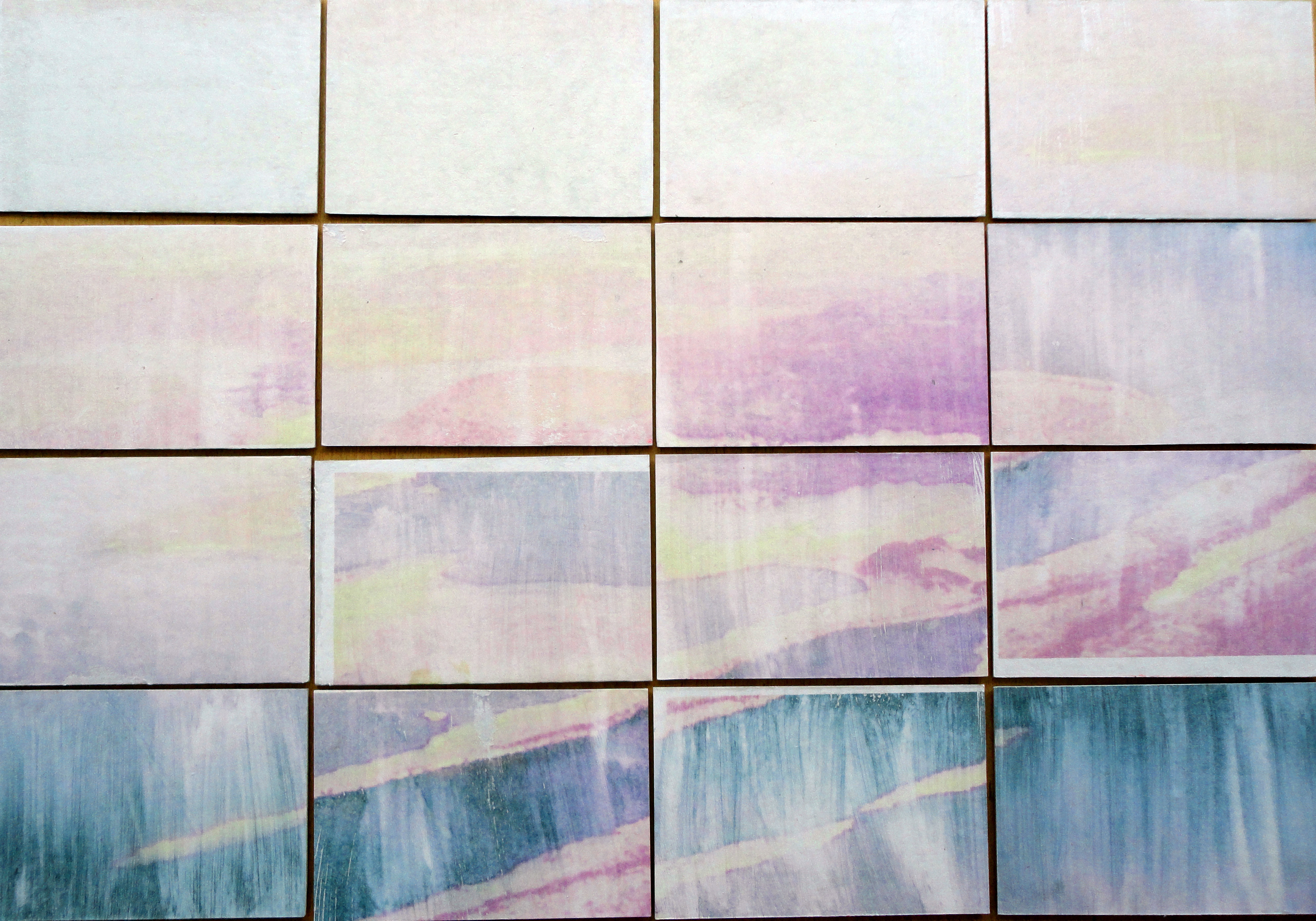
    Working through ideas of sliding screens, landscapes that alter with display and positioning, I have created a series of hand made book covers with silkscreen colour field prints and photographic transfer collages. The bleached out colours slide in front of the photographic images, variously obscuring them and allowing the viewer only a fragment of the whole:

    Lacuna3


    These continue a dialogue with disappearing spaces, and further explores the notion of the impermanence. It can also bit put together as a book

  • DIS/PLAY

    An exhibition of Printmaking and Book Arts at Camberwell College, 3rd Floor Studios-

    The first of a three part series called DIS/PLAY including a participatory review with all artists and a chance to present a new piece of work
    critDISPLAY


  • projections into the night


    Testing out projections of the clouds film in the night onto different surfaces- part of a new project bringing sublime moments to urban settings- in an ongoing collaboration with Giuseppina Esposito as part of Hung, Drawn and Altered curatorial series- Hung, Drawn and Altered, for baylorsanddiamond. Here the inexorable changing of the sky is projected onto a brick wall in Peckham and open doorway, allowing the viewer to discover or happen upon a small moment of wonder.


    projection2

  • How deep is your love

    IMG_0049Using sugar lift techniques on steel plates, printed onto Japanese paper and mounted on hand made book covers, the liquid outlines of the ‘drawing’ or painting are repeated in different configurations. These are paired back from images of lakes (lacuna 1/2) and become small worlds in their own right- fragmented, small pools are filled in with indian ink, turning their topographical surfaces into patterned craters.

  • reversal of fortune


    turkanaopen1Photo transfer collage of the Turkana Basin- where the oldest humanoid remains have been found: Turkana Boy. Also one of the most hostile environments on earth, very little grows or flourishes here. World’s largest alkaline lake. Fragments of the landscape are transferred onto book board with only the barest traces of the original coming through. The abstraction of the landscape into the essence of its marks and colours is something I am looking at- the marks of the acryic matt medium can still be seen on the surface of the piece giving it a painterly quality.

    Working with the notion of permanence and impermanence, instability and uncertainty, photographs of natural phenomena become an allegory for the passage of time and the futility of small acts of survival. I am interested in the wonder of contemplation as a counterbalance to the pseudo-certainty of science , categorizing these quasi imperceptible changes and microscopic alterations in inventories of my own design.