

Selected from the RA Summer Show by Norman Ackroyd who has invited me to participate in this show at the Zillah Bell Gallery in Thirsk, Yorkshire from the 9 September to the 14th October 2017.
Selected from the RA Summer Show by Norman Ackroyd who has invited me to participate in this show at the Zillah Bell Gallery in Thirsk, Yorkshire from the 9 September to the 14th October 2017.

C-type print of Larsen ice shelf crack, 90 gsm paper
Part of the exhibition Le Coq Artiste, at Q Park, 38-42 Whitcomb street, London

Weather Vain (2017) Film still, video projection 5 mins looped, car park wall
 THE WEATHER VAIN PROJECT
Climate change denial is on the rise and with Donald Trump’s administration made up of a group of people who are ALL sceptical of the science behind global warming, and his withdrawal from the Paris Climate Deal, we need to push the message of the anthropocene in a post-truth world.
CLIMATE CHANGE IS REAL. GO ROGUE. RESIST. REPEAT. REWIND
Halley VI research centre in Antarctica is closing for Winter because of crack in the Brunt Ice Shelf (2017)
Massive rift in the Larsen ice shelf has gained extra 10 km since January 1. If it breaks off it will create the biggest drifting iceberg in recorded history
2016 was the hottest year on record.
London air pollution at highest levels since records began.
climate.nasa.gov/evidence
Badlands national Park tweets
#climatechangeisreal
 Part of my PHD show at the Peltz Gallery, Birbkeck School of Art. Deconstructing the disappearing landscape and reshaping it. Installation views of some of the iterations of my thesis on the translation of forms from analogue to digital. For a read through my thoughts here is the abstract:
ABSTRACT
_____________________________________________________________________________________________________________
This research is centred on the notion of landscape as a construct of marginal and multiple dialogues. It is a project that originates from a rediscovered family album of (fading and yellowing) photographs of the Latin American landscape at the turn of the 20th century. In particular a set of photographs that centre on the Paraná River in Argentina, a place where myth, recent history in the form of narratives of the Desaparecidos (those ‘disappeared’ by the military junta 1976-1983) and memory collide. An early analogue photograph of the river has sparked a series of creative interventions that explore the interstices between photography and printmaking, fragmenting the initial image in order to create new hybrid photographic prints using photo-etching and photo-transfer processes, projections. The return of the material to the flat surface of the digital is of critical concern, as the ‘uncanny’ surface is turned into a haptic object more in keeping with printmaking practices and early pictorial photographs. This leads to questions about the pictorial outcomes of these experiments, their affective resonance and the enactment of the hand-made, where touch and ‘noise’ return to the surface of the print as a resistance and response to discourses of acceleration and reproduction, remembering and forgetting. The theoretical and practical methodology is cyclical, and the multiplicity of layers of discourse appears both in the printed multiple and in the multiple voices I use to discuss the project in writing. The research is timely, as digital practices and the internet continue to accelerate the dissemination of the networked image, and speed up our relationship to photographs and prints, I aim to slow them down, in order to discover what is lost or gained in the process, both in practical and theoretical terms. In the ruin of the analogue photographs I use, therefore, a new ruination and expansion of the surface occurs as I develop my photographic plates at the site of the river Paraná itself. In the encounter with the landscape, the forensic traces of Argentina’s political disappeared (now part of an ongoing forensic anthropological investigation at sites along the Paraná) create latent marks on their surface and these invisible fragments serve to embed disruptive historical narratives into the process of making itself, as the river becomes the site of convergence. These geographical and metaphorical bodies of water that have been distorted, disappeared and ‘ruined’ (both by a history of dictatorship cover ups and photographic memory) are able to reappear as latent and liminal image-objects in an open ended encounter with multiple narratives of the river.


Frontier (2016)
C-type print of press transferred positive on Hahnemule paper
210 cm x 108 cm

What lies beneath (2016)
C-type print on Hahnemule paper
210 cm x 108 cm
Part of the auratic translations of images from the 1930s on the river in Argentina, these photographic renditions (large scale) emphasize the troughs and fissures that occur when different surfaces and iterations occur. The research is centred on a photo album found of my grandfather’s images of the turn of the century in Latin America and create a dialogue across time.


Hats on the Paraná, circa 1930, Henry Richard Ahrens
PROLOGUE: Hats on the Paraná
____________________________________________________________________________________________________________
There is a photograph that I discovered some years ago, a photograph in ruins, that can be read only in the ‘traces of what is no longer present.’[1] I will call this photograph ‘Hats on the Paraná’, as it has triggered an investigation into the network of dialogues that address narratives of place in contemporary printmaking and photographic practice. This photograph, taken circa 1930, along the River Paraná in Argentina (according to a caption on the back) is a snapshot found in a forgotten family album and belonged to my grandfather, Henry Richard Ahrens. I never knew my grandfather, as he died when I was only two years old. All that remains of him in my mind’s eye is a vague recollection of a tall man in a hat, at the margins of my vision, as well as a handful of stories of him handed down by my family. Certainly, I had no idea that he was a keen photographer and, as so many of his time, collected his photographs in the pages of a now worn and weathered photographic album. The image itself (figure 2) is an analogue, silver based print and captures a faded shot of the river, trees running up both sides in a triangular composition, sky mirroring the water and a bird flying out of the image. On closer inspection, in the bottom right hand corner of the photograph, cut off by the edge of the print are two gentlemen in what appears to be a rowing boat (the end of an oar cuts the photographic plane): they are both wearing a hat, each one is different and distinct – one belonging to the man whose face we see, is a captain’s white naval hat with a visor, the other, firmly positioned on the head of a man whose face is turned and obscured, is a fedora. Both men in their hats inhabit the print at its margins, as incomplete figures, torso-less, limbless, and now, lifeless and still. They represent the only human presence visible in the image; two strangers whose existence remains partially engrained on the surface of a print, yet unknown to me. The surface of the print is beginning to deteriorate, creating superficial distortions on the left side, and across the bottom of the image. These are chemical erasures that are reacting to time and atmospheric conditions, eating at the print and peeling away at its coating. Where the river fades into a vanishing point in the centre of the photograph and the trees that frame it on both sides collide with the sky, the faintest shadow of a white sun hangs low on the horizon. The man wearing the captain’s hat is positioned, it would seem, in the centre of the boat, mouth poised open mid speech, while the second man sits behind him, looking away from the photographer, only his right ear and the dark socket of his right eye below his hat are visible. A tear in the right hand corner of the print creates a line culminating in a void, which runs through the captain’s eyes, scratching them from visibility, and impeding our view and, in a sense, the captain’s ability to see ‘us’. He is blinded by the sun, as he squints at the photographic lens, and twice blinded by the fragile scratches. The print is in ruin, compromised by time and alchemy, and its meaning is being lost with it. The photograph is fading, yellowing and tearing, as its transient history marks its passage through time: it is of the past, but seen in the present and disappearing into its future.
[1] Eduardo Cadava, 2001, p.35


Jian Zhou curated the show at the China Academy of Art in Hangzhou as part of Impact 9 Printmaking Conference 2015. The show is now open at Times Art Museum, Beijing and will be touring to Changsha and Shanghai later in the year. My piece, ‘They were Hanging There’ (2015) above is now part of the International Collection at the National Museum of Art, Beijing.

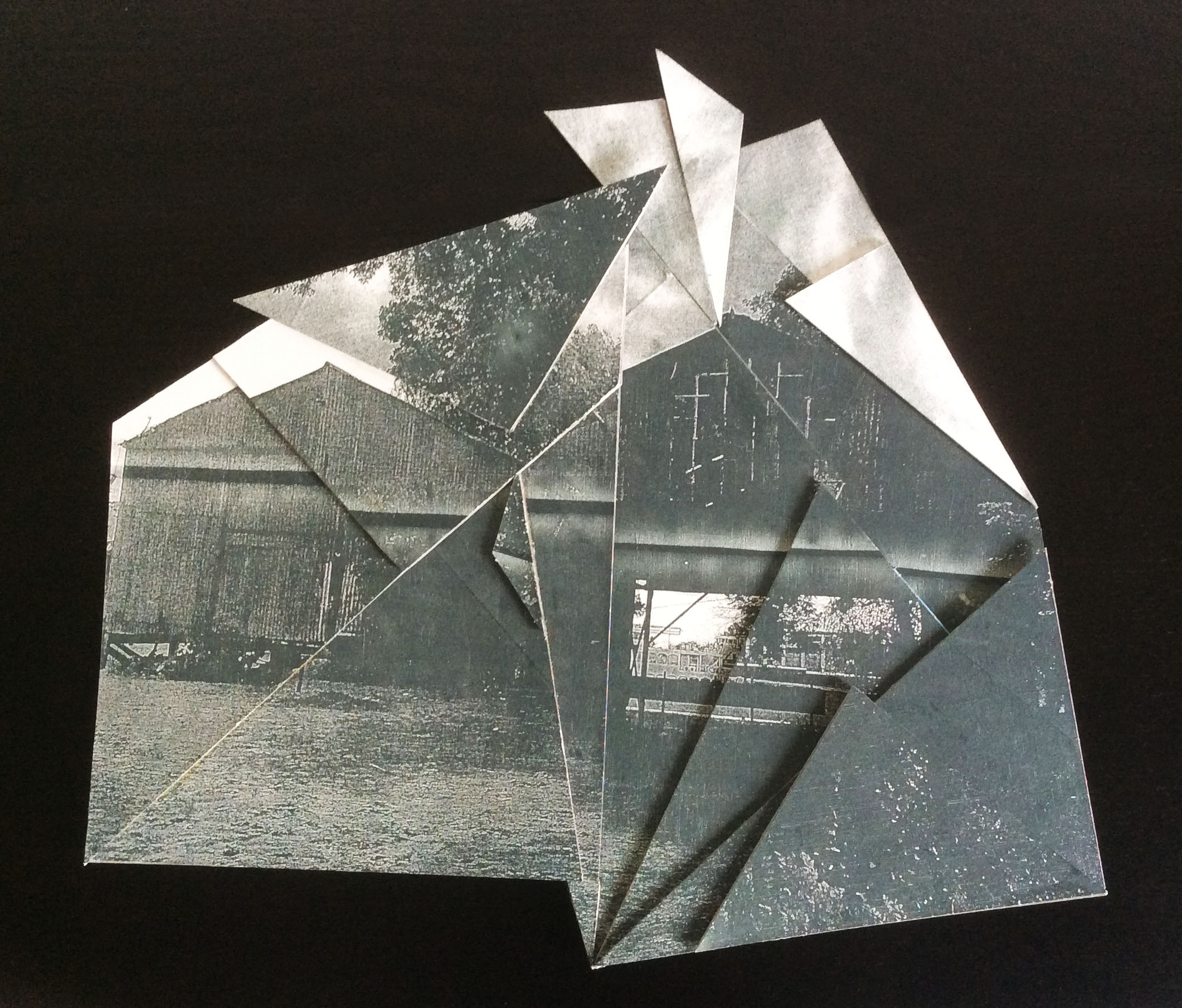
Sculptural photographic pieces, currently being shown at WAC, Somerset
4 x triangles with C-type prints, fragments of the same view, layered one in front of the other, with pieces missing, they allude to the difficulties of remembering and our multiple responses and encounters with the landscape.
 Folded Paraná (2015) Photo etching on fabriano rosaspina paper, 80 cm (h) x 150 cm
From the series of photo-etchings exposed and developed on the banks of the Paraná with water from the river. The last known resting place of thousands of Argentina’s political disappeared during the Dirty War, the plates are embued with the dna of these lost lives, while the iron rich waters serve to hide in their depths the fragments of their history.
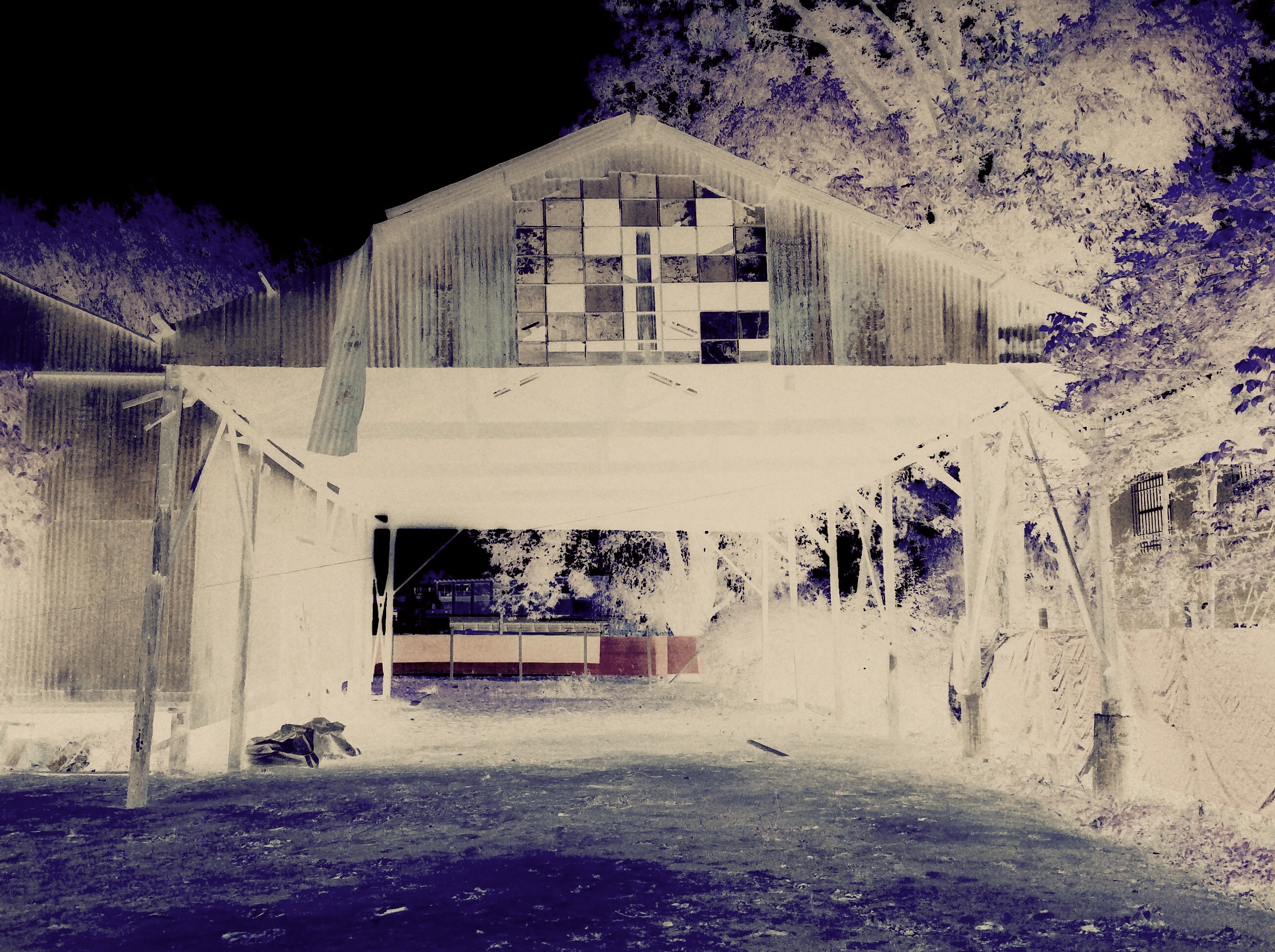
New print sculpture of abandoned logging sheds along the Parana river (50 cm x 70 cm), handmade prints on fabriano rosaspina paper, cut and mounted on acid free book covers
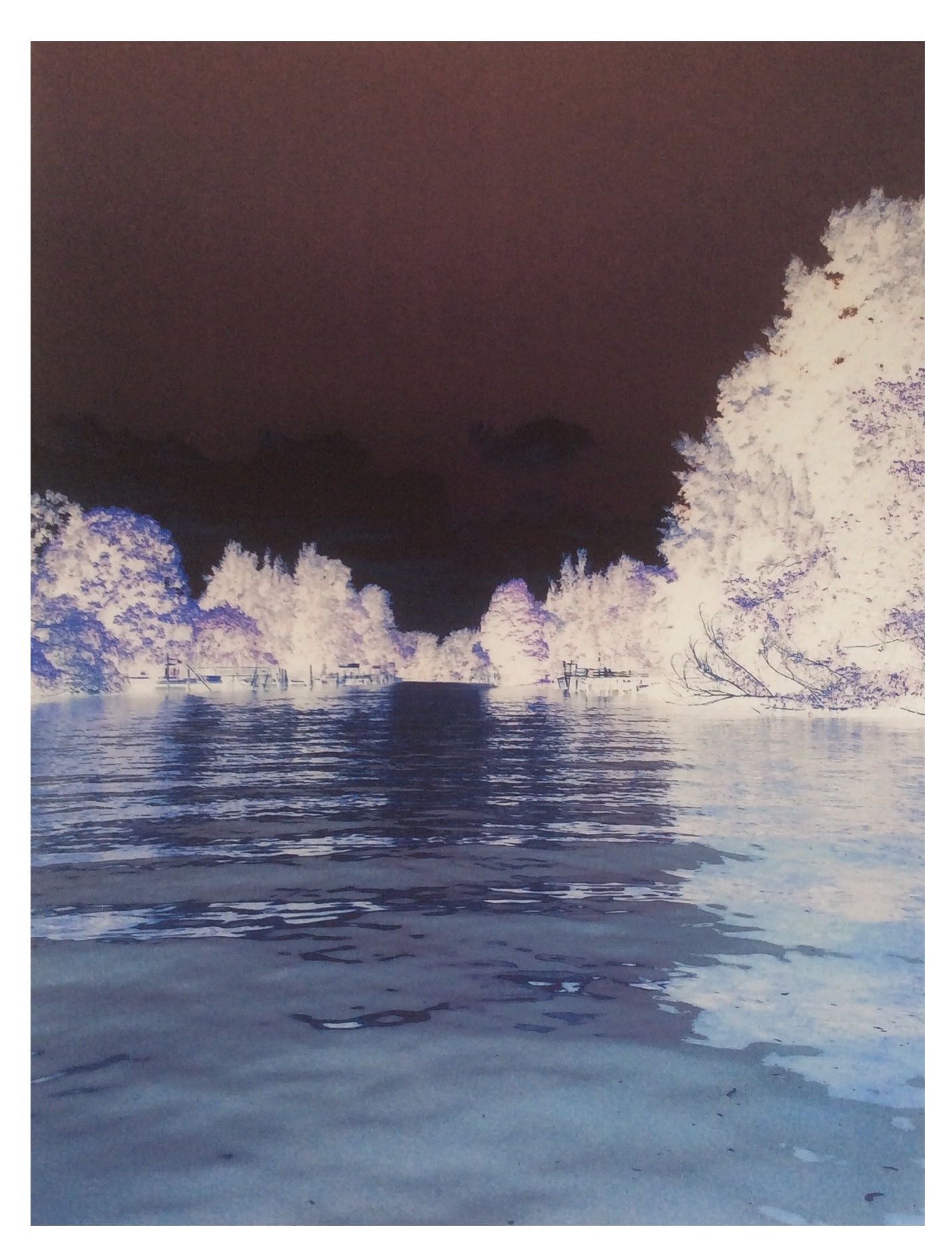 New c-type prints on Japanese awagami paper, 210 cm x 108 cm – photographic negative
The title refers to the fact that new evidence has emerged in recent years stating that islanders in the Delta region of Argentina lived for years during the Dirty War (1976-83) with bodies hanging from trees as military planes dropped them drugged and still alive into the depths of the river below. The ethereal beauty of the place belies its traumatic history.
This piece has been acquired by the China National Art Museum in Beijing, and is currently on show in Intersecting Practice of Contemporary Printmaking in the UK, China Academy of Art, Hangzhou
From the series on the Paraná- micro residencia, Tigre, Argentina
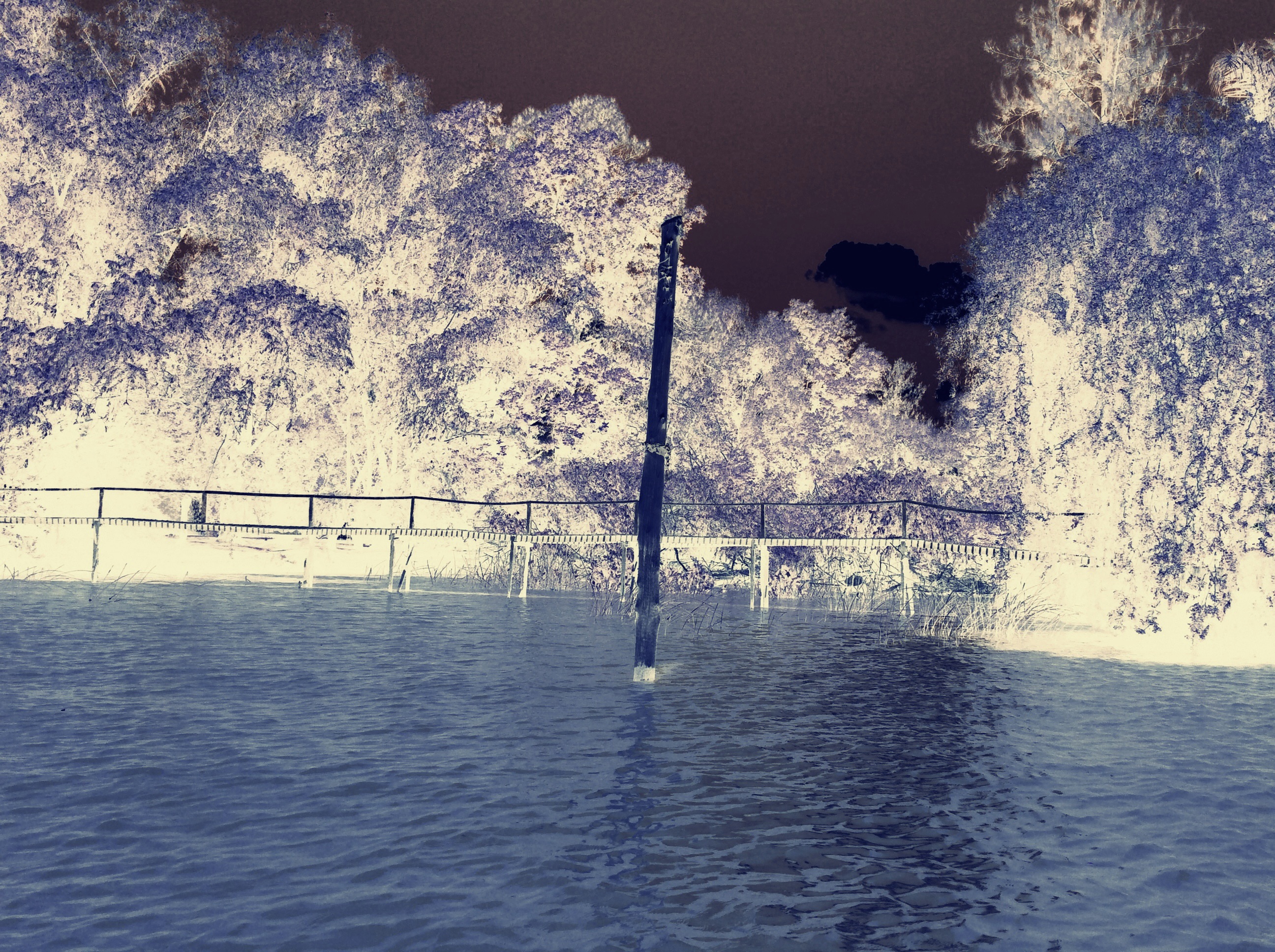
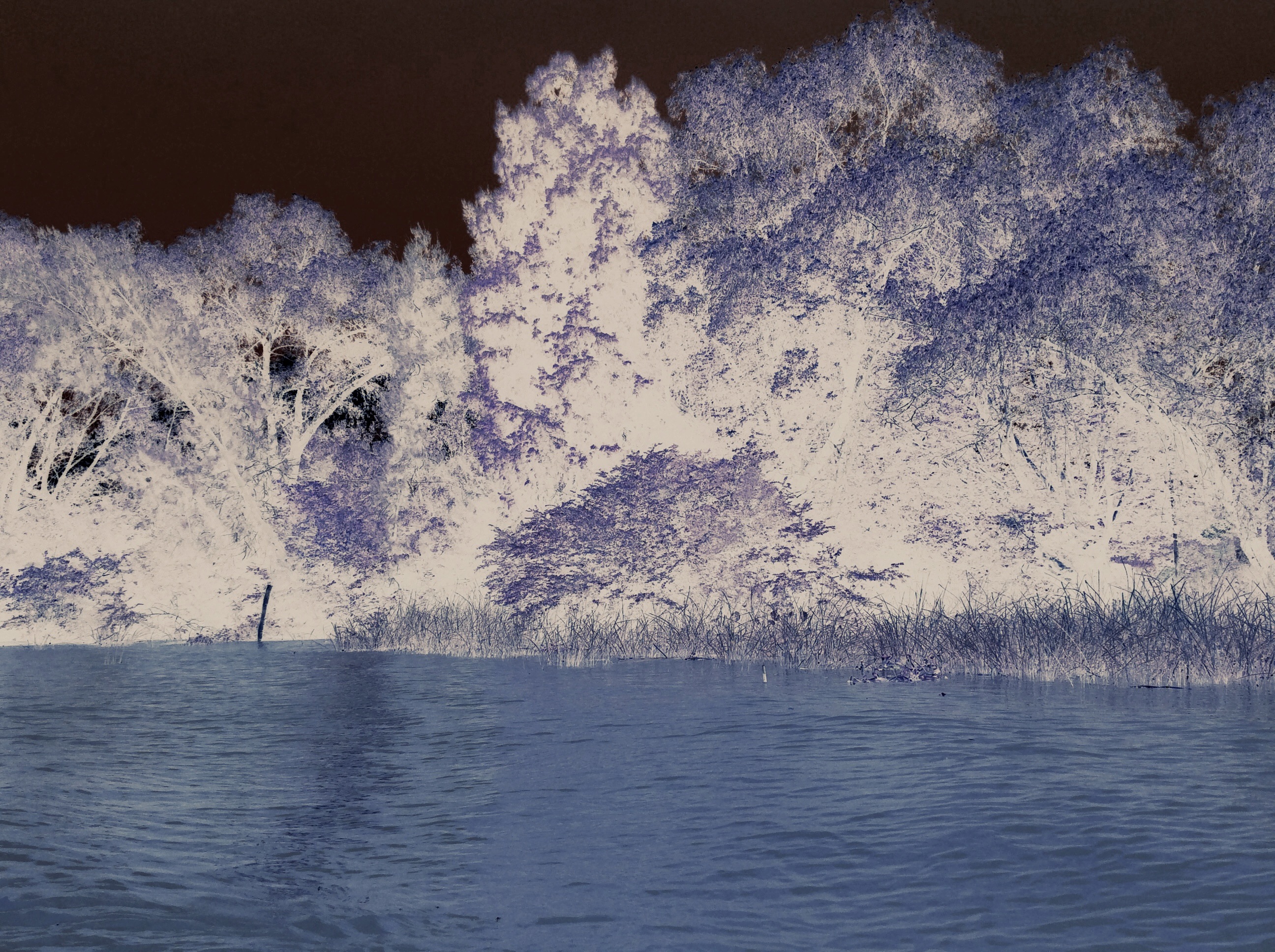

West Yorkshire Print Workshop Gallery exhibition, 10th January- 7th February 2015
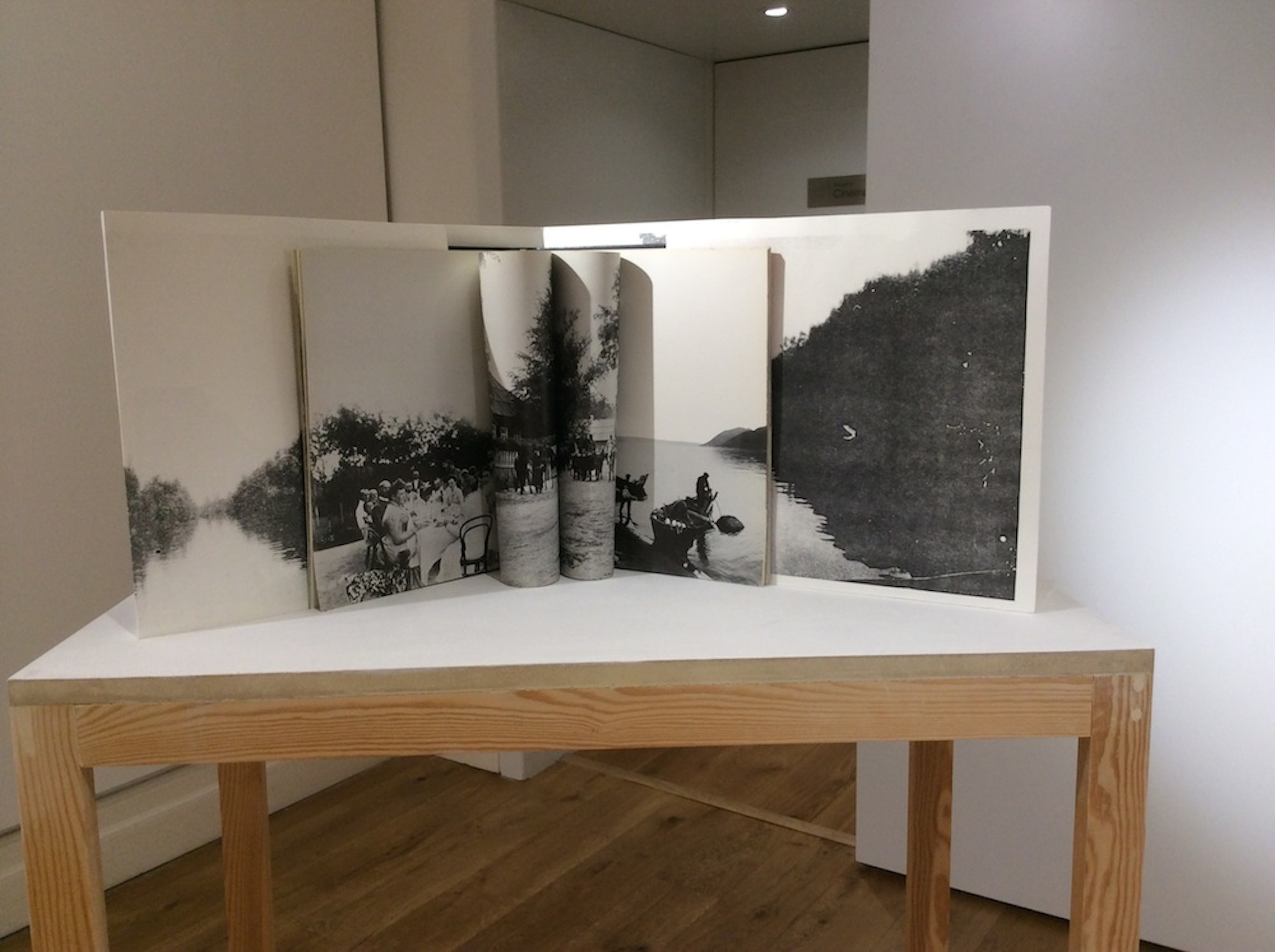
Here are some initial combination prints/photoetchings of my research on the Delta, an hour from Buenos Aires. The plates and photographs were taken, exposed and developed on the river (with river water), so that the subject matter of the prints, and their making, create a circular methodology:

Looking at aspects of landscape as construct and the reversible nature of print, I am working with new combination photo-etchings and digital prints to think through these ideas in a large scale. As my microresidency in Argentina approaches (Parana river workshops and ACE residency) these prints start to work with the physical intervention of place in the image:

This piece was chosen for the Neo: Print Prize exhibition 2014 (open till 2nd November) and received a little mention in: http://www.karenjoyce01.com/blog/the-2014-neo-print-prize:
“Lots to like here, though I didn’t particularly go for any of the prize prints. I don’t expect to – I’m never going to be a cutting edge sort of a person, in what I do or what I like, and so what? My own particular favourite was Barbara Ann Swan‘s ‘DNA Women’ – I stood in front of it for ages, studying the riveting selection of body parts. Loved it. I liked the strips of film way of hanging it, trailing on to the floor, too.
Karen Joyce writes, ‘I also really liked Rosey Prince’s Elephant (with yellow wall) for its lovely combination of saturated colour with obviously black and white, Victoria Ahrens’ rich Home Front, Fiona Grady’s Arcs I-V as they quietly developed across the set, and the non-prizewinning work by Susan Eyre, Paradise Row SW4 for that lovely, sly flash of colour in amongst the shades of grey’
A review of the show Publish/Curate at TJ Boulting Gallery this August in Photofusion, with a small mention of my work.
http://www.photofusion.org/exhibition-review-publishcurate-tj-boulting/


‘The most notable curated presentation of work in my opinion is the images chosen by Alic Janta, co-editior of Adad Books, where we see a collection of work by different artists, all fitting especially well together. They all seem to have in common the exploration of printing processes and alternative presentation, in a way reflecting the perhaps most visible book in their shop, Far, by Emile Hyperion. Janta has been especially successful with the selection of work by Whitney McVeigh, Victorie Thieree, Victoria Ahrens, David Noonan, and I would have loved to enter Adad Books’ website to see publications by all these artists and more, as a special and unique approach to alternative presentation also in book form.’ Marianne Bjørnmyr
Beautifully curated exhibition at Balzac’s Print Rooms in the lovely St Germain arrondissment of Paris. This exhibition that I was asked to show in will now be coming to London, to the TJ Boulting Gallery:

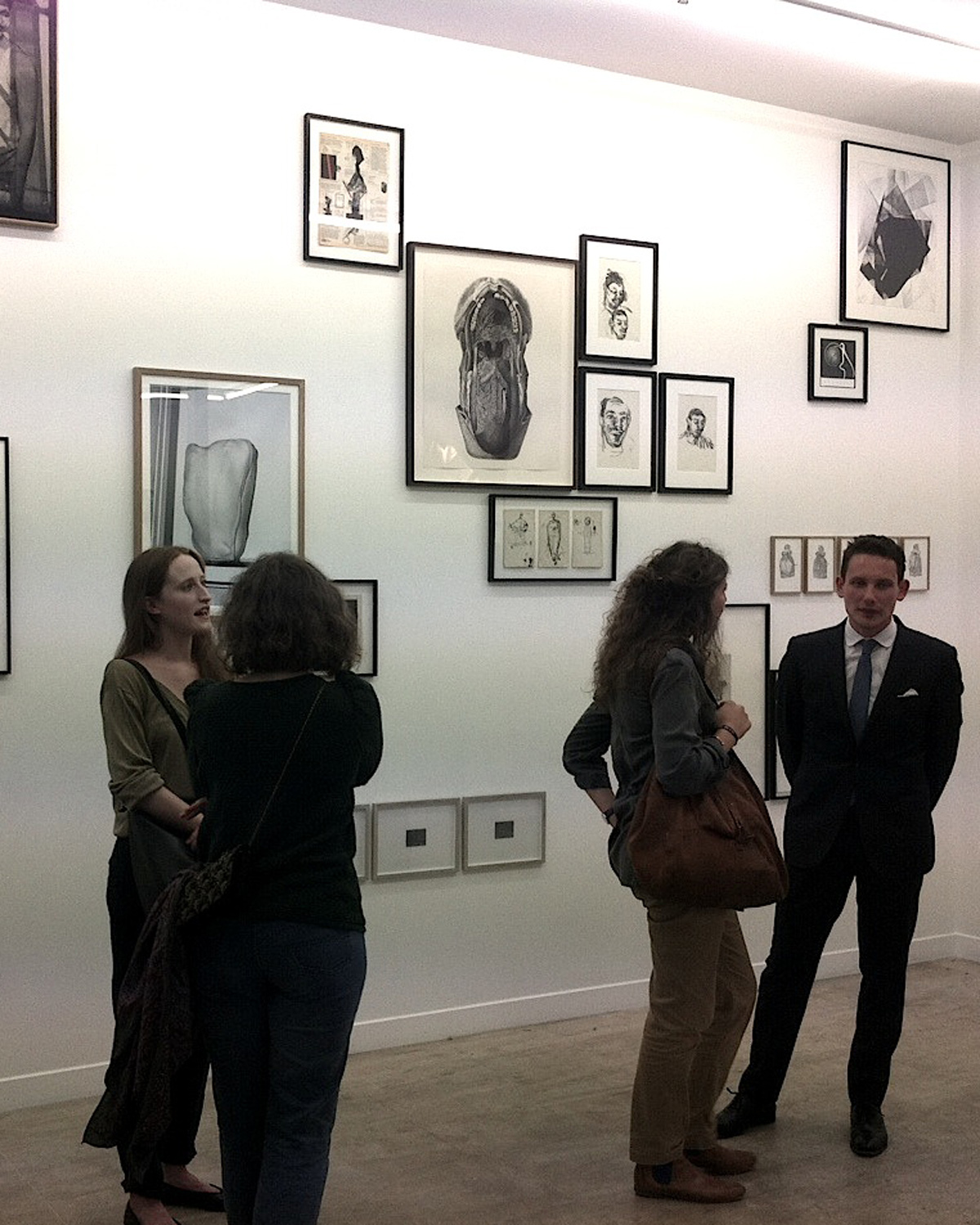
TRACES, a group show part of HONORE.
This exhibition is taking place in Balzac’s former printing workshop on Rue de Visconti, in Paris and will present the work of artists who have been exploring various techniques such as lithography, photo-etching, collotype, biro-drawing, digitally processed photography, screen-printing, mono-print, photogram, transfer, etc and attempting to get new results, whether they have developed their own process or have kept in line with classical tradition of printing and drawing and who have as a result created interesting textural works.
This show presented alongside exhibitions by Hannah Watson from Trolley Books and Aron Morel from Morel Books, features works by:
ADELINE DE MONSEIGNAT
AKIKO TAKIZAWA
ASGER CARSLEN
AUGUSTIN STEYER
BOO SAVILLE
CHARLOTTE SCHNABL
DAVID NOONAN
ELOISE VAN DER HEYDEN
HUGO WILSON
IVY ARMOUR
TAMSIN RELLY
VICTOIRE THIERREE
VICTORIA AHRENS
WHITNEY McVEIGH and
WILLIAM ROPER-CURZON
Private view: Wednesday 18th June from 7pm.
Thursday 19th – Saturday 21th, noon till 8 pm
17-19 Rue de Visconti, 75006 Paris
The HONORE PROJECT is the brainchild of Laure Flammarion and Pauline Levêque
www.honorevisconti.com
www.ruevisconti-editions.com
Alix Janta-Polczynski
www.adadbooks.com
River Dialogues
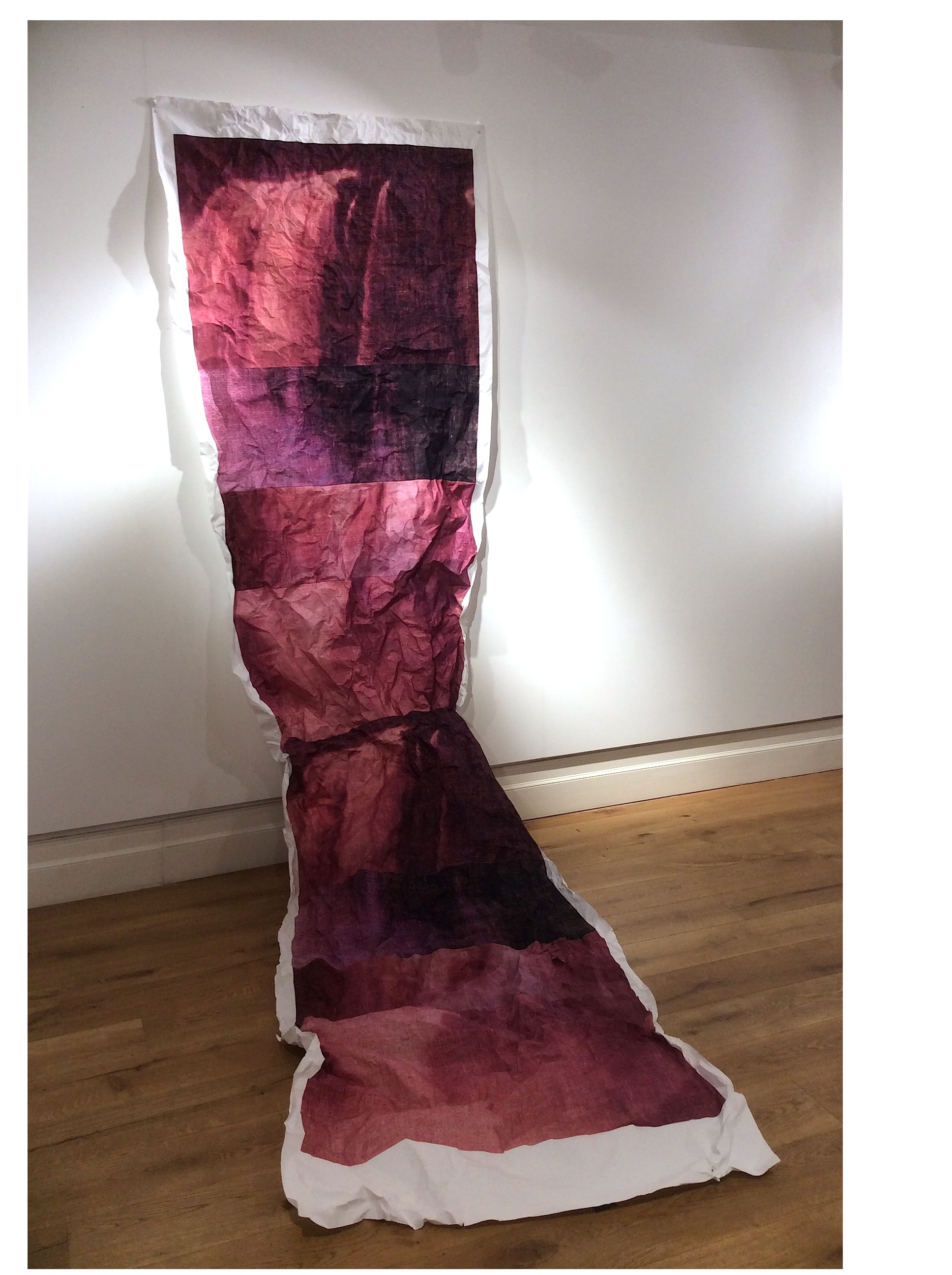 The Fall (2014) Crumpled C-type prints on copy paper from press transferred film stills, 350 cm x 110 cm
PRINT DIALOGUES at the Peltz Gallery, Birkbeck School of Art, 43 Gordon Square, WC1H
1st May- 10th May 2014
2nd May: 4pm artist talk
6th May: 6pm round table discussion with Dr. Gabriel Koureas, Dr. Patrizia di Bello and Professor Paul Coldwell
Print Dialogues is an exhibition of lens-based work by the artist and researcher VICTORIA AHRENS. Her work explores the intersection between photography and printmaking in the depiction of the lost landscape. Working initially from rediscovered analogue snapshots of the river, she reworks the imagery through various screens, questioning the fragmentary nature of memory and the possibility of the ruin in her contemporary print installations.
Supported by Birkbeck School of Art and the History and Theory of Photography Research Centre
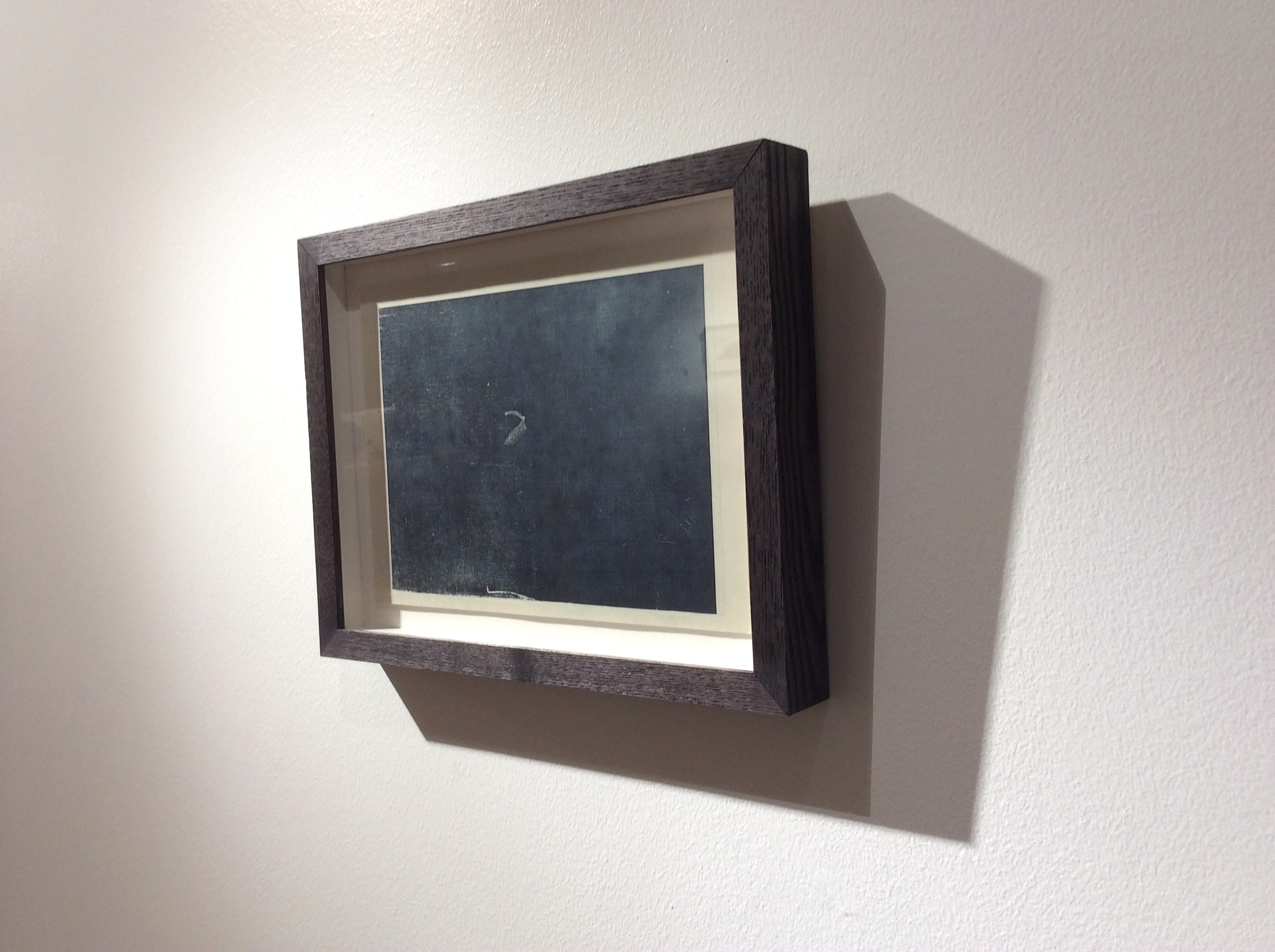

Article in Printmaking Today: Perfect Purchase, with a review of the Clifford Chance Purchase Prize I won in November 2013. The prize means one of my prints becomes a part of the one of the largest print collections in Britain. It was selected by Emma Stibbon RA who ‘was impressed with the quality of her print installation. Stibbon said Ahrens’ work ‘alludes to the history of landscape art, the picturesque, but re-invents it into something surprising.’

Fragments of found photographs from the turn of the century, transferred through the press, then photoetched with blue screen projected onto it- continuing my experiments into the interstices between printmaking and photography, digital and analogue.
 The Fall, C-type print on 90 gsm copy paper, folded- shortlisted for the Bloomberg New Contemporaries 2014

 Victoria Ahrens