Giving the blues is a series of photographs and photo gravures of the Cascate delle Marmore, the Marmore waterfalls in Umbria, Italy. It is the largest man made waterfall in the world at 165 metres high, and was created by diverting the Velino River into the Nera River Gorge by the Romans in 271 BC to drain the mosquito ridden marshlands in the area. The waterfalls were greatly admired, and referred to in the writings of Virgil in the Aeneid, written about by Dante Alighieri, and by the Romantic poet Lord Byron. Leonardo da Vinci, Salvator Rosa, and JMW Turner all depicted them, as they represented the epitome of the sublime experience. Today, the water can be ‘switched off’ as its flow is regulated for hydro electric power generation- at times there is no waterfall, at others it appears again. This is a depiction of the constructed nature of our natural landscapes, shaping the world to suit our own aesthetic and needs, the Anthropocene in action.
Astonished by its scale and history, I chose to use turquoise and Prussian blue pigments to print these images, both as large scale pigment prints and photo etchings, drawing on the colours of architectural blueprints. Turquoise pigments are among the oldest known blues used by the Egyptians, while Prussian blue is one of the first commercialised synthetic blues created purely by chance by the German alchemist Johann Dippel and a pigment maker Johan Diesbach in 1704. It was used extensively in Japanese Aizuri-e woodblock prints (such as Hokusai’s The Wave) and in Picasso’s blue period. The story of blue pigments is the history of the world, and of art. Blue is a colour that is so prevalent in nature, yet so ephemeral (the sky, the sea, etc.) as it is largely an illusion of the eye or a refraction of light. There are few naturally occurring blues in the world: indigo, ultramarine and azurite are the few, but require much labour and expense to make. Cobalt blue has a difficult history of exploitation and extraction in the Congo. Yet the composition of Prussian blue (iron salts and cyanide essentially) is the very composition of cyanotypes (blueprints). It’s invention during the Romantic period, nods both to the exalted nature of the image and to the alchemical precursors of photography, engraving and etching used to depict it. These waterfalls then, become the ‘blueprint’ for all waterfalls, acting as the ultimate illusion of a natural wonder.
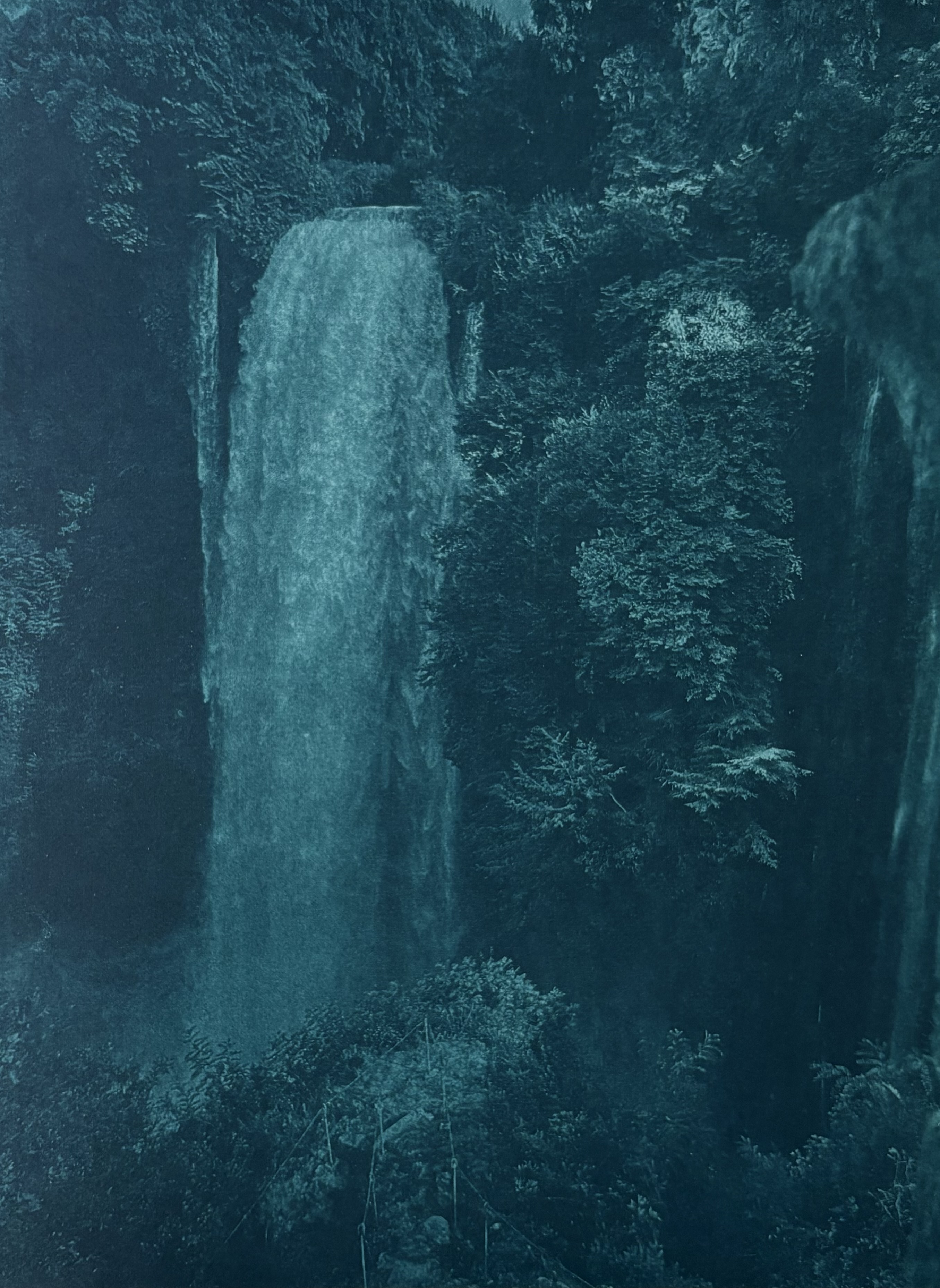
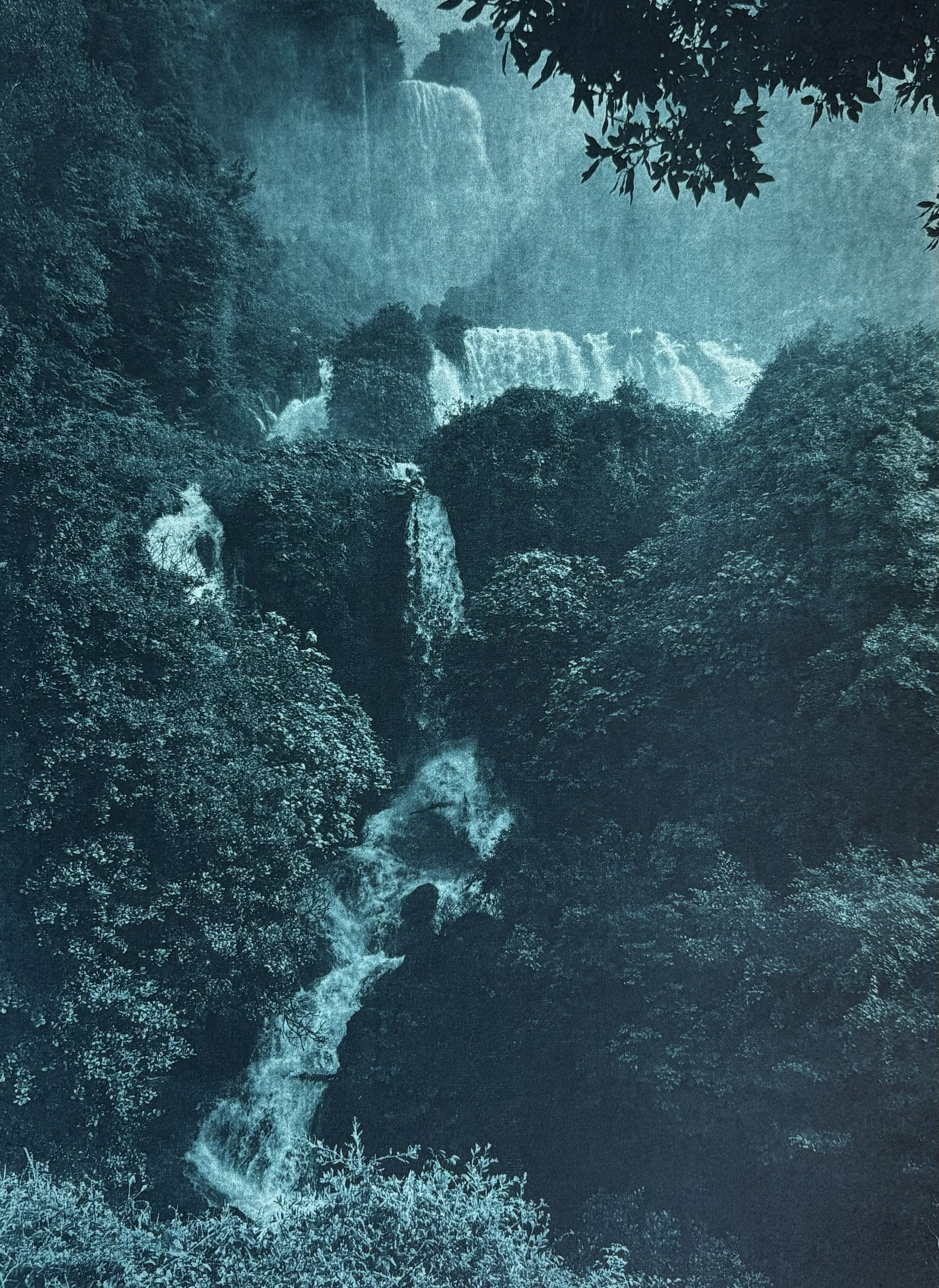
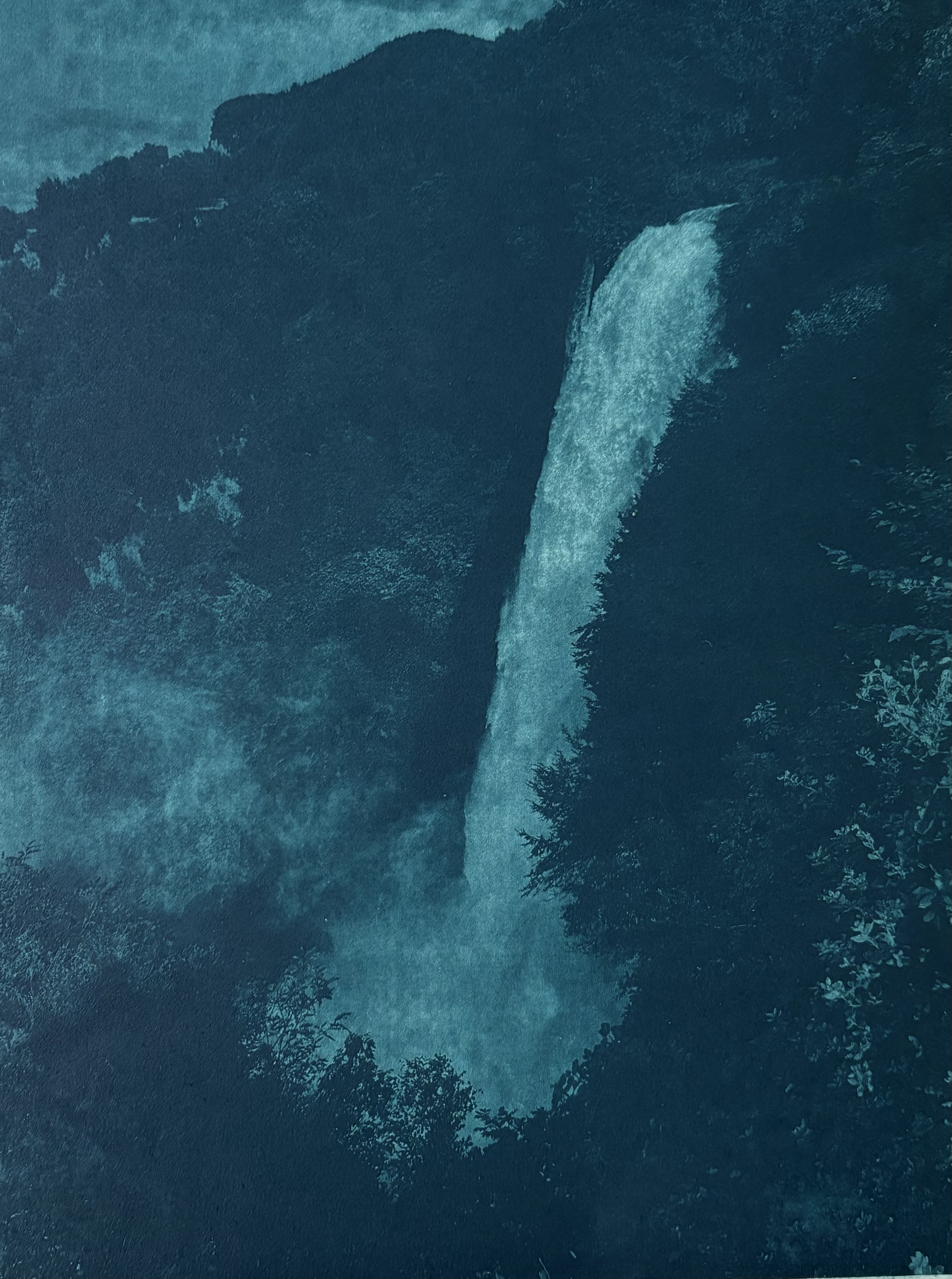
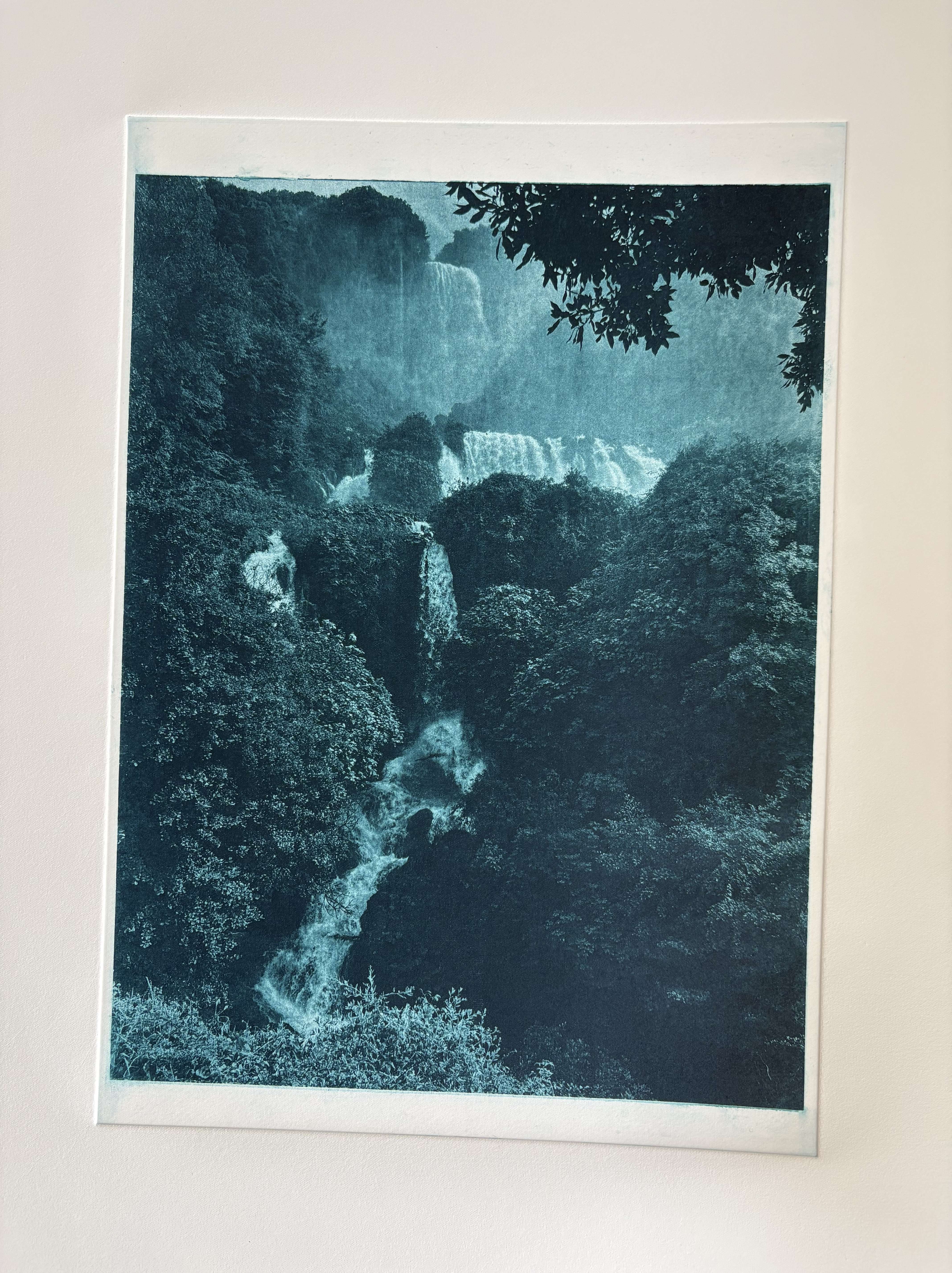
These photo etchings use the Prussian blue and turqoise pigments referred to in the introduction to the project. They are 60 cm x 70 cm and can be framed or mounted onto the installation, or around the installation.
Below is the projected film of the waterfalls onto the large scale fragmented installation of photographic pigment prints (printed from analoge originals)
The Fall (2025)
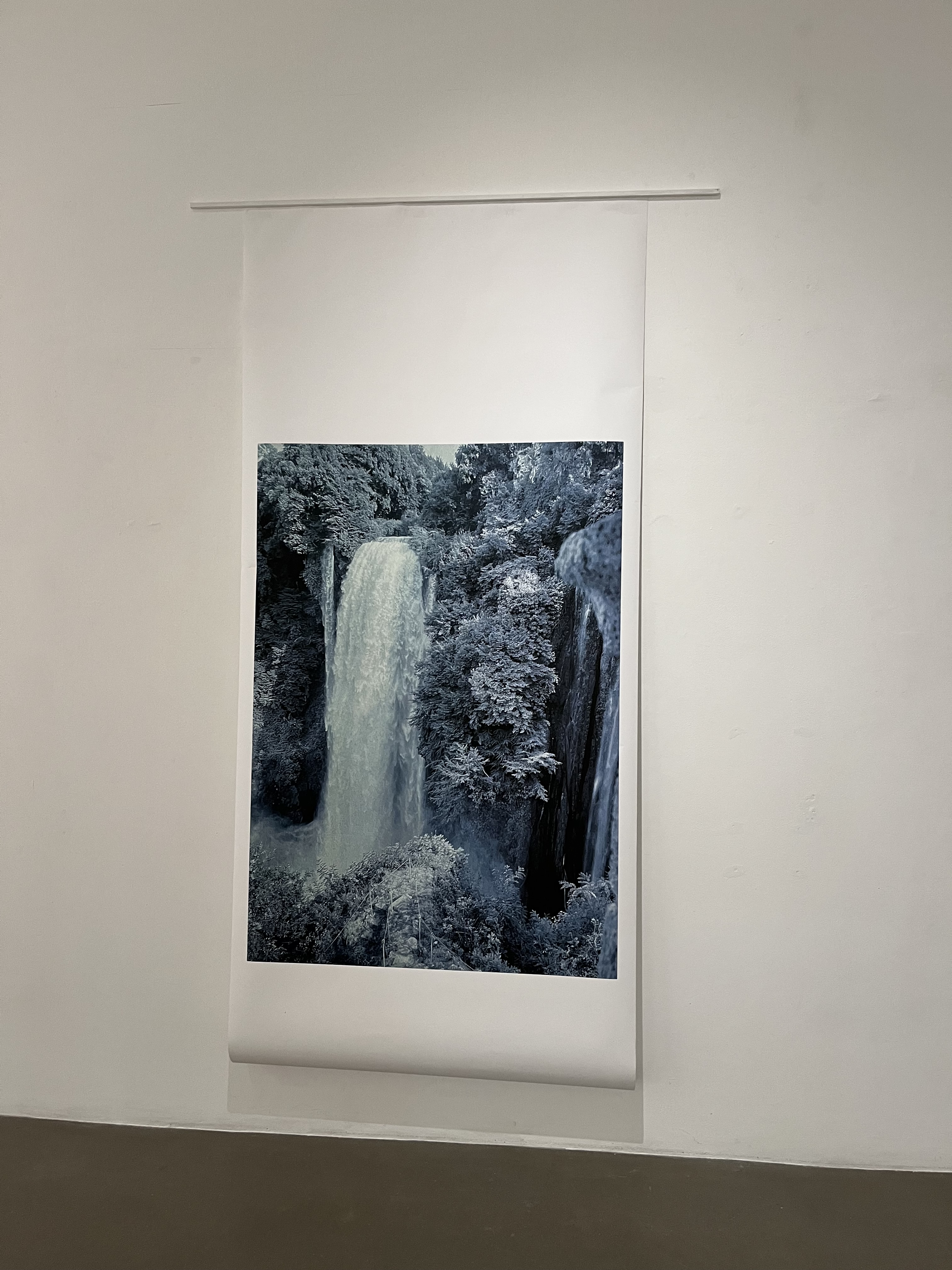
These photo etchings can be combined with a multimedia installation of a projection onto the surface of a fragmented, large scale version of the waterfalls as pigment prints.
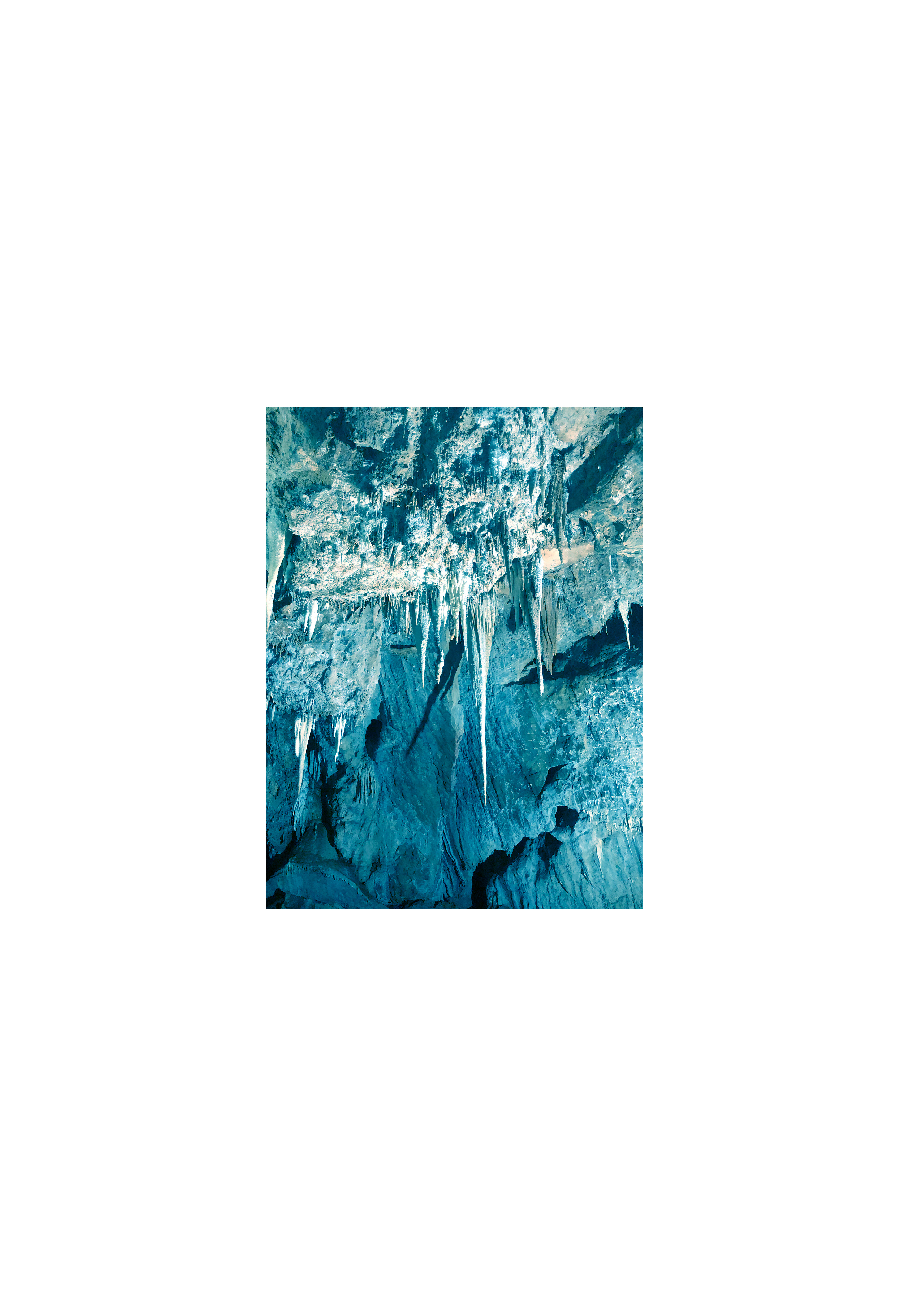
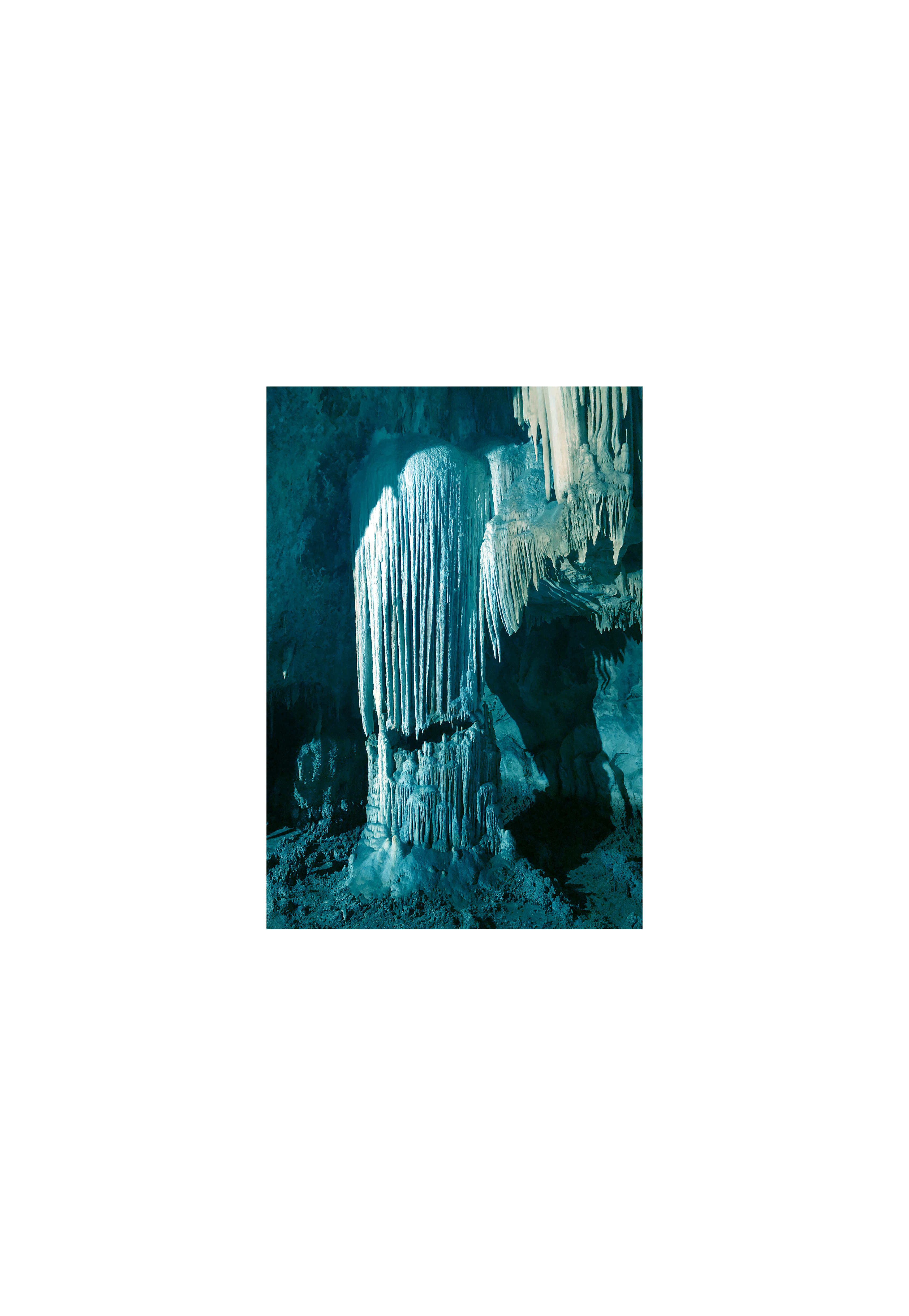
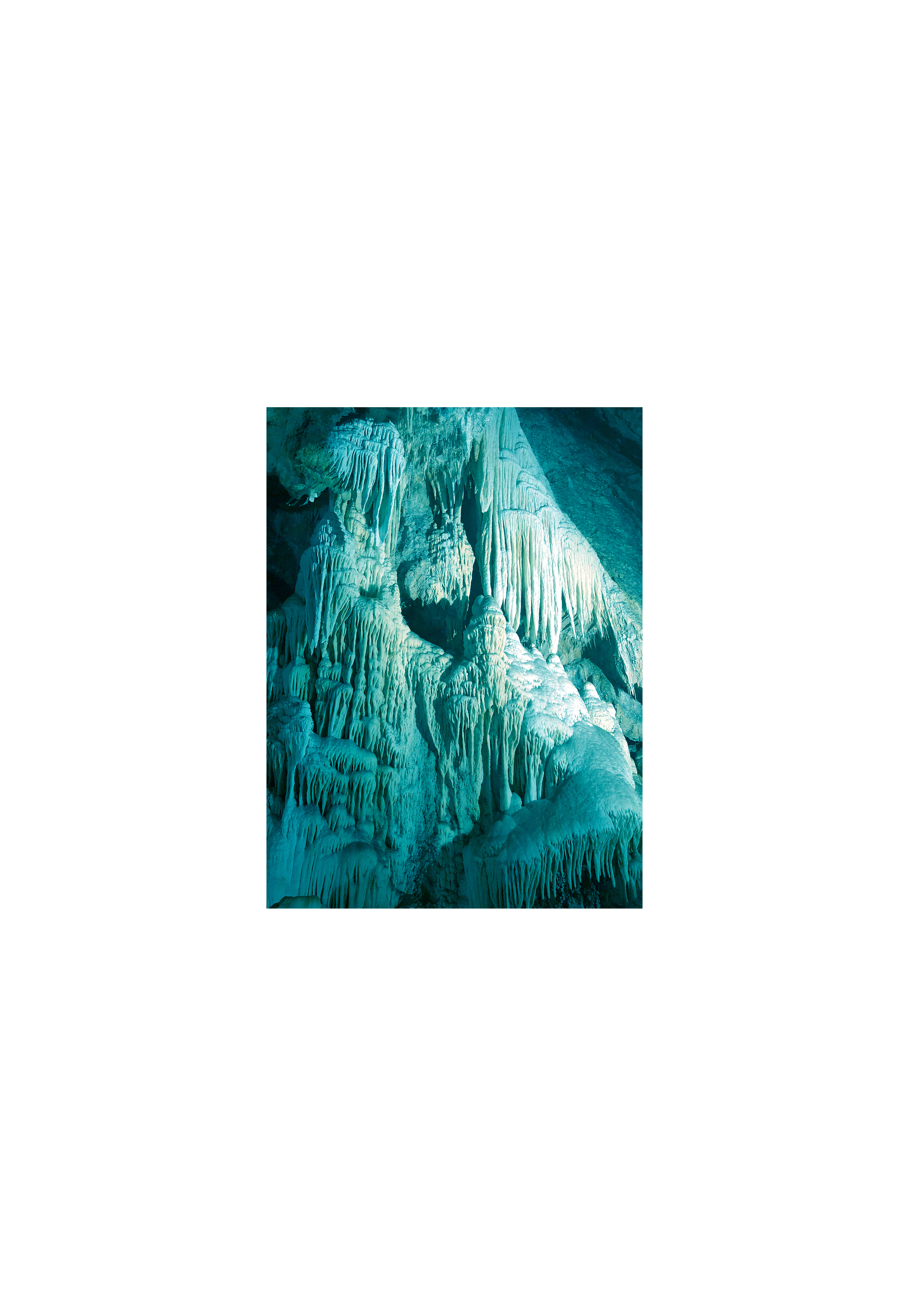
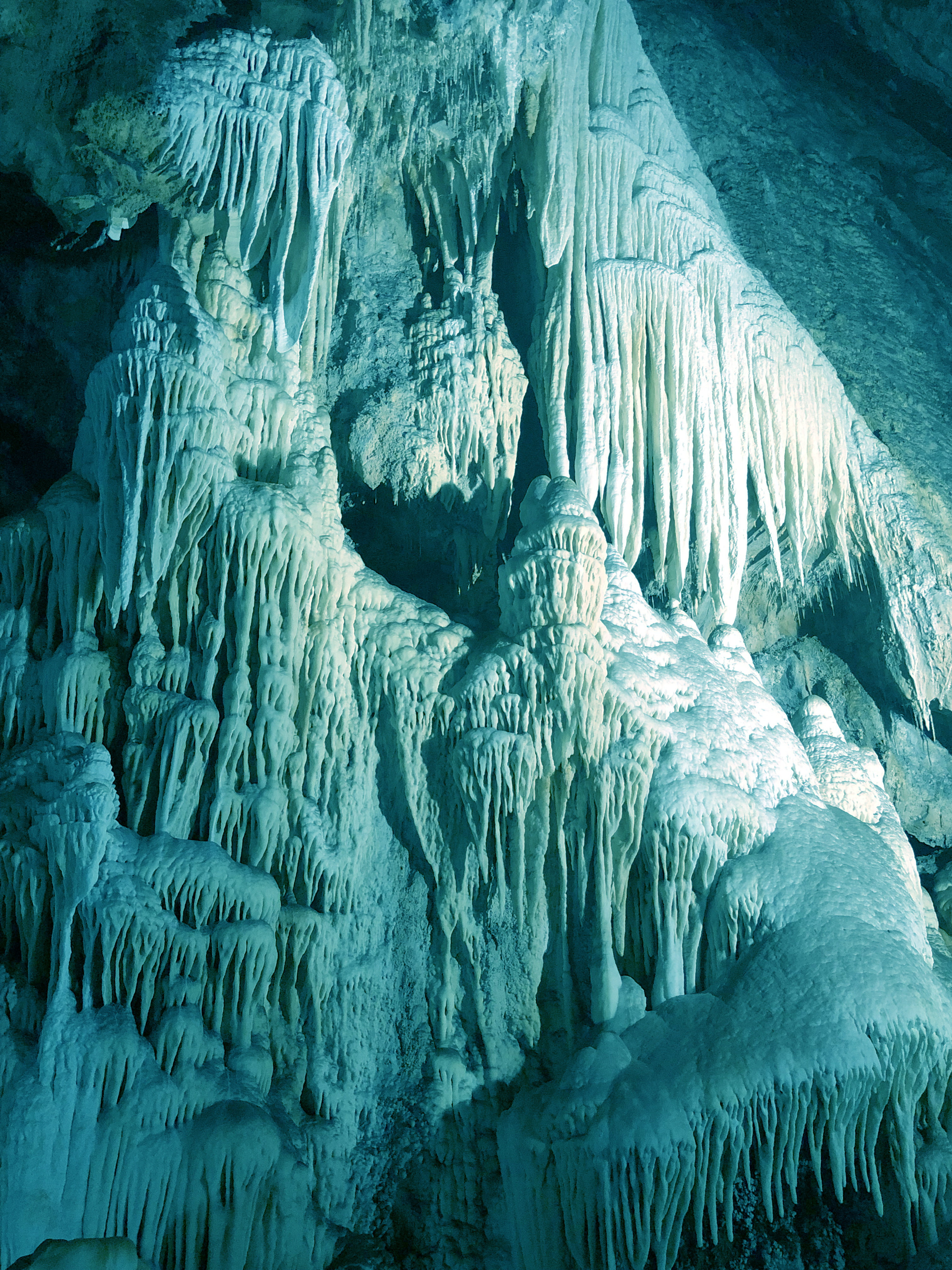
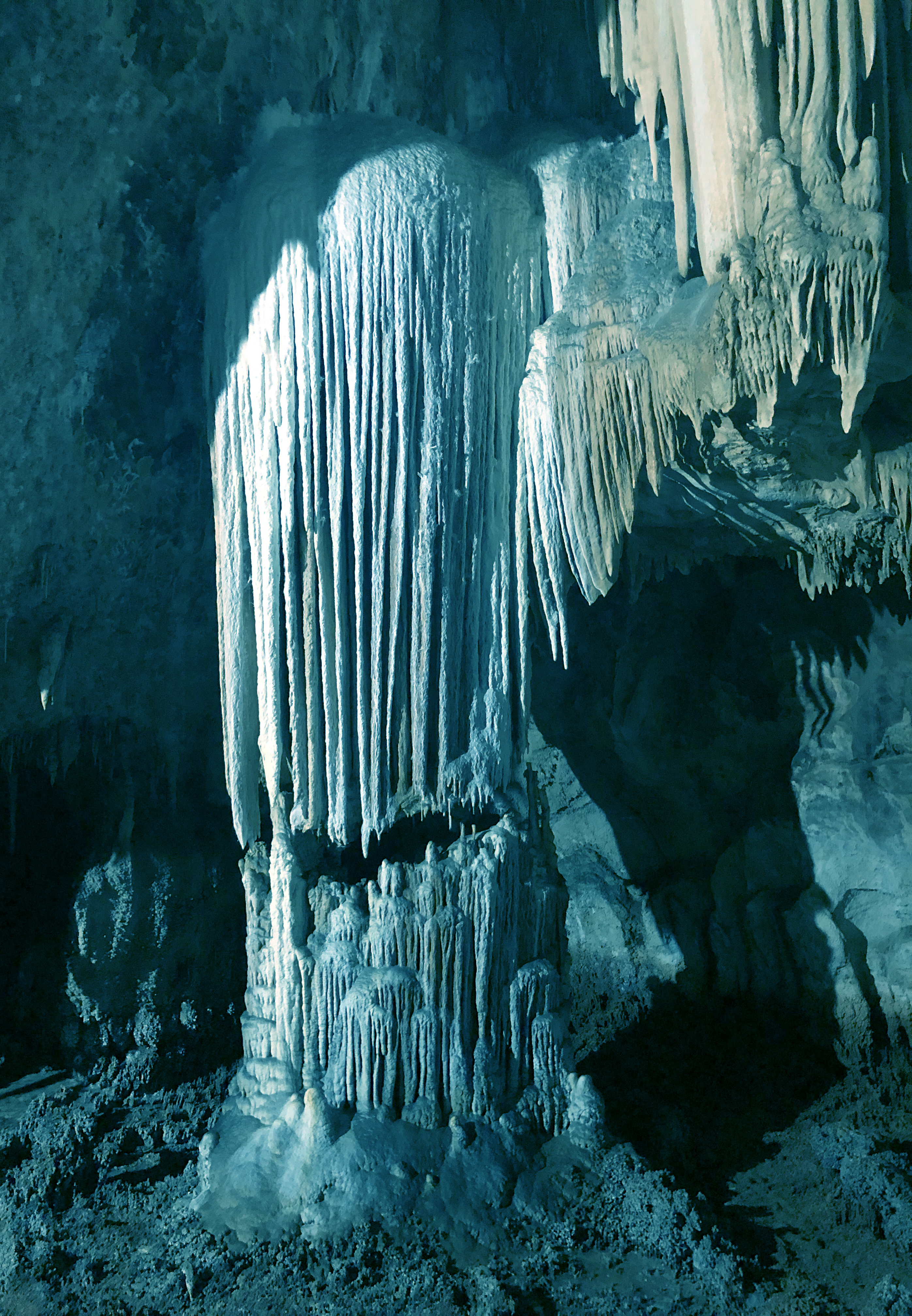
In Blue Cave, part of the same series, subterranean caverns beneath the falls form a counter-scenario. Shaped by dripping water over calcium carbonate, stalactites and stalagmites grow like casts of shadows. These caves recall Plato’s allegory, where appearances stand in for reality, and also echo photography itself—light revealed through narrow apertures, images born from darkness. In the Romantic imagination, such caves signified subconscious depth and scientific discovery, hollow stages for wonder.

 Victoria Ahrens